
It is now 25 years since openDemocracy was conceived: time for me to leave its board of directors to become its honorary president. How has the world changed across the quarter-century and how has openDemocracy responded? It is a double narrative that may have lessons for the coming decade.
For we are in immediate danger in a way that is new. The climate, our democracies for those who enjoy them, peoples’ economic well-being everywhere: all are at risk in these cruel, fraudulent and bitter times. Terrible wars in Africa, the Middle East and the Black Sea also threaten to destabilise the nuclear confrontation of the great powers. Making it even worse, the web, which could be an honest, shared arena of communication, is being corrupted.
To take just one aspect of the ‘polycrisis’: if Donald Trump wins the US presidency in 2024, as opinion polls predict he will, it could be our 1933 – a violent, lawless leader committed to ensuring power for his white minority in command of the greatest surveillance and military system the world has known.
In 2016, Trump was an outsider who ran for publicity and ego and didn’t expect to win. His victory was like a jailbreak for many, an understandable rebuke of the Clinton-Bush-Obama decades of military defeat, financial crash and skyrocketing inequality – something I analysed in my book ‘The Lure of Greatness’. In 2024, a Trump supremacy will be quite different. Now an experienced politician, he has remade the Republican Party in his own image, and he and his supporters will be committed to never losing power again.
Furthermore, Trump is a climate denier. Subsequent generations can repair the gravest political catastrophe, but climate breakdown is irreversible. Should the US abandon even its present efforts to mitigate what may already be a self-accelerating feedback, what hope is there for our environment?
Yet now two giant US oil producers, ExxonMobil and Chevron, flush with cash from high gas prices, are investing $60bn and $50bn respectively in the growth of fossil fuel consumption. As The New York Times reports, they are “doubling down” on carbon consumption, making “enormous bets on oil for years to come”.
The danger is not something that might happen in the future. The status quo itself is the greatest danger
Those “bets” are also a massive wager that the Biden administration will fail to replace carbon consumption with renewables. It seems that a significant part of corporate America is putting its money on a new Trump presidency.
Like a matador’s cape, however, the cry of “Danger!” can lead us to charge past its source. Today the danger is not something that might happen in the future. The status quo itself is the greatest danger – to our climate, our democracies, our economic well-being, our future as humans and our right to speak and publish without being trashed and pilloried.
The status quo is more than a set of institutions. It is a dynamic and onward-pressing set of clashing interests. Note well, it is not a singularity. Capitalism isn’t a unified system developing according to its own economic imperatives: in world terms, it is a brawl of uneven development, driven by nation states in battle with each other.

2001: from globalisation to war
How, then, is today’s world different from the one into which we launched openDemocracy in May 2001? The big difference is that much was potentially positive in the ‘status quo’ at the start of the millennium. China was joining the World Trade Organization, bringing hundreds of millions out of poverty. A few months earlier the world’s most climate-conscious politician had won the most votes for US president, and even though George W. Bush had stolen the election, still he was an idiot and there was hope that Al Gore could win in 2004. More importantly, the Kyoto protocol was coming into force. Vladimir Putin was restoring much needed Russian pride. The EU was coming together with its own currency and expanding to become the home of eastern Europe. And even though Tony Blair had sold the pass on the UK’s democratic future (triggering the creation of openDemocracy), the Human Rights Act and Freedom of Information Act were newly in force, both the NHS and British public education had been saved and the Sure Start programme for deprived children had begun.
Above all, there was the internet and the freshly created World Wide Web. Its risks were obvious: the financialisation of capital and commercialisation of television had created a ‘society of the spectacle’ that dissolved class and commodified individuals into consumers. The web threatened to intensify this, yet it also offered new forms of collective agency and honest communication.
We determined to seize the opportunity. This is how Susan Richards, one of the four co-founders along with Paul Hilder, David Hayes and me, put it, in her tenth-anniversary reflection:
We had grown up with media which told us what to think. Our global forum had to be different. We needed to build a place that would be strong enough to pose large questions. A crucible that could contain difference. A place to host civilised debate about how to design a common future – one that would be more just, more democratic and sustainable than the past.
Accessible to all cultures, to people everywhere, this had to be a place where the voices of the marginalised and oppressed counted as much as those of the powerful. A place where power could be held to account.

From the start we identified ‘globalisation’ as a defining issue (along with others like the media, city and country, and the EU). We did not expect to be debating war and terrorism.
The 1999 ‘Battle of Seattle’ against a meeting of the World Trade Organization ensured that globalisation was already contested. And, shortly after we launched, Italian police showed unbelievable ferocity in setting upon people gathering to protest against a G8 summit in Genoa, Italy.

I went to Paris to interview Maria Cattaui, who headed the International Chamber of Commerce, and arranged two encounters with Peter Sutherland, who had created the World Trade Organization, in his London office at Goldman Sachs. The writers Caspar Henderson and George Monbiot talked about governing globalisation. There were two conversations with Susan George, the pioneering critic of the treatment of the Global South, who with wisdom and experience sought to get the anti-globalisation militants to engage with realities. In her encounter with the historian and activist Ezequiel Adamovsky in 2004 you can already sense the ‘alt-globalisation’ movement’s fatal inability to escape from leftist self-regard.
We didn’t succeed in holding power to account or persuading the left to embrace genuine debate. But we did run a gripping eight-part exchange between two professors genuinely interested in what each other argued: Paul Hirst and David Held. For Held, globalisation was irreversible; he looked forward to world-wide democratic government. Hirst insisted that, on the contrary, the arena of democracy remains the nation state. Furthermore, just as the first period of globalisation – which followed the invention of the telegraph – ended with the First World War, so too could today’s globalisation be reversed.
I recall discussing the exchange with the political theorist Tom Nairn and agreeing that Paul made the stronger case. We did not imagine that trench warfare could return to Europe’s borders.
I had been convinced that 5% or 10% of the million-plus readership of The Economist would want a debate about the global society they were perpetrating. They didn’t
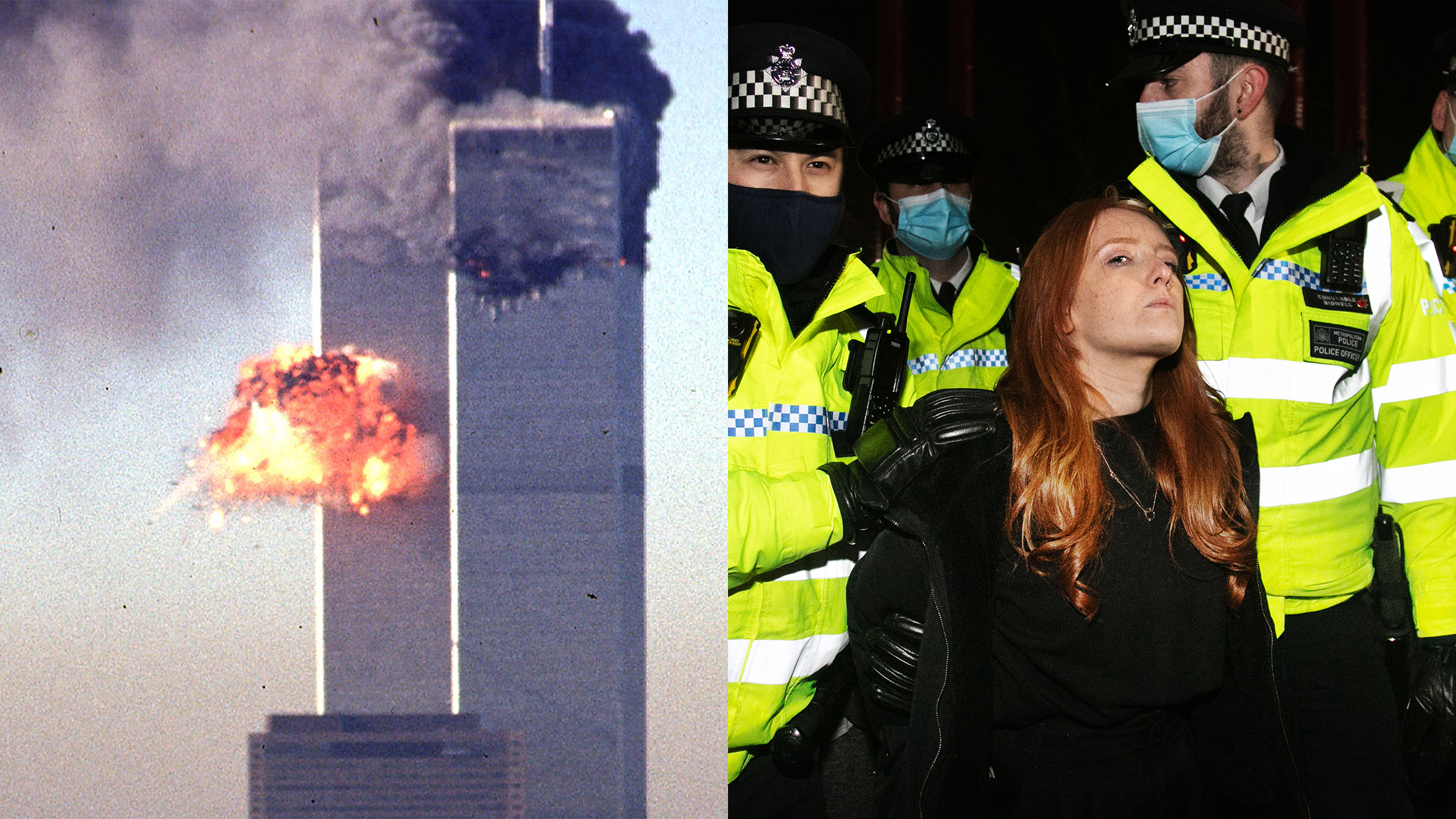
The crucial test for openDemocracy came when it was barely four months old, with 9/11. Our US editor, Todd Gitlin, watched the Twin Towers come down from his New York kitchen window and wrote ‘Is this our fate?’. He sensed and opposed the disastrous “revenge spasm” to come. I published it the same day and abandoned the centrepiece of our editorial plan, which was to create fortnightly ‘issues’. We went daily, building a genuinely global debate under the heading of ‘Is Terror the New Cold War?’ As Adam Ramsay says in his short history, openDemocracy had found its voice.

From then the preparations for the Iraq invasion and the war itself dominated much of our coverage. We ran a star-studded forum, including John le Carré, Günter Grass, Adonis, Jacqueline Rose, Jose Saramago, Timothy Garton Ash, John Berger, David Hare, Ian McEwan, Roger Scruton, Paul Gilroy, Salman Rushdie, Arnold Wesker, Ben Okri, Anita Roddick and many others. I’m especially proud of ‘Iraqi Voices’, where Iraqis, not outsiders, debated whether their country should be invaded. David Hayes wrote an overview of our Iraq coverage with many more links.
In April 2003, as US troops closed in on Baghdad, Paul Rogers not only predicted that ‘A thirty-year war’ was about to begin, he explained why three key trends – demographic, educational and media – would ensure an immense regional blowback. Tragically, this began that August with the suicide bombing of the United Nations offices in Baghdad. It was just at the time that Gil Loescher and Arthur Helton, who were reporting for us on refugees, were there interviewing the UN chief of mission, Sergio Vieira de Mello. He, Arthur and 20 others were killed. Gil lost his legs and we later published his chilling account: ‘I was not going to die in the rubble’.
Post-launch comedown
9/11 and the Iraq war gave openDemocracy a baptism of fire for which we were not prepared. I had been convinced that 5% or 10% of the million-plus readership of The Economist, working in international agencies, NGOs, policy teams and institutions, would want a debate about the global society they were perpetrating. They didn’t. Within their specialist concerns, yes, and nationally too. But, as James Curran concluded in his early history of the website, there wasn’t a global readership, however small. My co-founder Paul Hilder sensed the challenge from the start. In his first article for openDemocracy in August 2001 he said that the “global citizen” was arriving but we were “still at the beginning” and needed “burning patience”.
Around the world, however, there were writers who shared my impatience and wanted to publish in an independent curated space. It was their gift – uneven, irregular, but authentic – that ensured the site’s survival. In a generous endorsement John le Carré wrote: “Support openDemocracy: intelligent, unbought, unspun opinion, uncomfortable but necessary truths and a lot of good horsey argument: heaven knows they are in short enough supply!”
I realised someone more at home with the web than me was needed to manage this and Tony Curzon Price agreed to take over as editor-in-chief in 2007. He later summed up his view as: “The pulpit convinces no one. Instead, I believe credibility comes from being open to read, comment and reflect.” He slashed costs by nearly 70% and oversaw an increase in output, aided by his editor, Rosemary Bechler, who had been with openDemocracy since the start and was in effect our fifth co-founder.
Proliferation and crisis
Under their watch, as the financial crash swept Labour from power and the ‘Arab Spring’ and Occupy movement took off, a new generation piled into openDemocracy. The range of good horsey argument is breathtaking as you can see from Rosemary’s tenth-anniversary overview of what was published in early 2011.
It extended from Fred Halliday on ‘The Left and Jihad’ to Mike Edwards on ‘Love, reason and the future of civil society’, Rajeev Bhargava returning from the massacre in Gujarat and Nguyen Huu Dong on the Vietnam War. From Ann Pettifor in 2003 calling out ‘The coming first world debt crisis’ to Mark Fisher on ‘Exiting the Vampire Castle’ and Mary Kaldor in 2008 on ‘Gaza: the “new war”’ writing: “Ultimately, there can be no end to this new war unless and until Israelis begin to view Palestinians as fellow human beings”. From Vron Ware taking on Paul Kingsnorth to Jeremy Gilbert on ‘Postmodernity and the crisis of democracy’, to Satbir Singh – now openDemocracy’s chief executive – on ‘Delhi 2010: Where did it all go wrong?’, Hilary Wainwright on ‘”An excess of democracy”’, Alan Finlayson on Blue Labour, Niki Seth-Smith on the left and the ‘Big Society’ – including Neal Lawson and Sunder Katwala and a hilarious account of the Space Hijackers – Daniel Trilling and Jamie Mackay on ‘The far right beyond the stereotype: monetarism, media and the middle classes’, Philippe Marlière on Charlie Hebdo, Clare Sambrook on ‘It’s all right for Michael Gove’ and Gaspar Miklos Tamas ‘On Solidarity’…
The outcome, however, was like a splendid orchestra of brilliant performers warming up with no conductor in sight. Everyone played their instruments but few listened to the music of others. No new opera was created to draw subscriptions or secure the necessary financial support.
In response I had experimented with self-funding ‘sections’ within openDemocracy, starting in 2006 with 50.50, a project on gender equality, initially edited by Jane Gabriel. Tony Curzon Price built on this. In 2007 came OurKingdom, later openDemocracyUK, which he asked me to edit. In 2009 openDemocracy’s co-founder Susan Richards and Zygmunt Dzieciolowski launched oD Russia. Tom Rowley took it forward as oDR to cover the entire post-Soviet space, especially Ukraine, publishing in both English and Russian. From 2010 Clare Sambrook and, later, Rebecca Omonira-Oyekanmi conducted powerful investigations into social issues in the UK under the banner of Shine A Light. And in 2011 openDemocracy responded to the ‘Arab Spring’ with Arab Awakening, publishing in English and Arabic, edited by Walid el Houri and later renamed North Africa, West Asia.
It was an inspiring model. Michael Edwards launched Transformation in 2013 to consider ”the love that does justice”, the intersection of the personal and political. Beyond Trafficking and Slavery, led by Cameron Thibos, started in 2014. In 2015 came democraciaAbierta, edited by Francesc Badia i Dalmases, focusing on Latin America in English, Portuguese and Spanish; and in 2016 New Thinking for the British Economy, which evolved into ourEconomy in 2019.
Despite this ‘federal’ approach financial losses were building up when, in 2012, Magnus Nome was recruited to take over (in part thanks to an unsolicited article he had sent that went viral: it forensically dismantled US coverage of the Utøya massacre). He inherited a crisis not of his making. Of the many generous funders, David and Elaine Potter deserve a special shout out. Thanks to them, a huge matching-funds campaign was launched asking readers to save openDemocracy from bankruptcy. In 2013 Magnus was able to write ‘We did it!’ as £250,000 ensured the site’s survival.
The status quo turns toxic
But the website faced a fundamental problem. openDemocracy was founded to host an honest and democratic debate about a world being reshaped by globalisation. Instead it had confronted the eruption of terrorism and the need to oppose the Washington-orchestrated ‘war on terror’. In 2005, Isabel Hilton had insisted that to do this she and I write a joint essay. She had become openDemocracy’s content editor and wanted to set out our perspective. In ‘Democracy and openDemocracy’ we listed the universal legal principles and core values of democracy – which we saw as an ‘anti-fundamentalism’ – and we welcomed the “democratic warming” signalled by the international opposition to the invasion of Iraq. This, uniquely for a protest movement, took place before the event and showed that the streets were now wiser than the elites.

The warming boiled over into the Occupy movement, only to be supressed by reaction. US-led globalisation changed its nature in the aftermath of three disasters: the humiliating defeat of the Iraq and Afghan invasions; the financial crash and the way the banks were saved; and the Snowden revelations of the surveillance state.
An ironic cameo illuminates what happened. In an attempt to understand what Snowden had unveiled I interviewed Michael Hayden, the US military general who had overseen the creation of America’s surveillance state after 9/11. He was at the time the most right-wing person I’d ever met. I told him that because his system knew everything about me it threatened my liberty. He disagreed, saying I was quite safe because I was “uninteresting”. He was confident that everyone’s data was in safe hands and could only be used to track down terrorists and criminals. Today Hayden has become a leading military critic of Donald Trump. He now fears that should Trump regain the presidency he will exploit the databases that Hayden initiated in a way that Hayden himself told me would never happen.
This world, in which the dynamics of the ‘status quo’ have become so negative, demands a more combative approach than the one Susan Richards described. It’s a demonstration of John le Carré’s shrewdness that he saw the answer from the start. openDemocracy’s first fictional appearance was in 2003, at the denouement of le Carré’s ‘Absolute Friends’, lightly disguised as “a non-for-profit website pledged to transparency in politics”. This suggested a different role: to expose and reveal wrongdoing free from the taint of vested interests.
2014: The whistleblowing watchdog
It was the way forward Mary Fitzgerald developed after she became editor-in-chief in 2014. As she wrote in her first manifesto-like statement, the site should turn towards “high-quality reporting, analysis and debate that interrogates the underlying structures of the world we live in, unconstrained by commercial imperative or political allegiance. That asks the uncomfortable questions and prompts proper, thoughtful answers.”
We understood our country, but our country did not wish to be ‘understood’
Five months later she published journalist Peter Oborne’s stunning account of why he was resigning from The Telegraph. He reported that he had uncovered venality in its editorial practices that its owners wouldn’t rectify. His piece went viral and for the first time openDemocracy made an impression on the encircled wagons of self-interest that have become the UK’s ruling class. It was a lesson that Mary built on.
The Brexit referendum was a turning point and a hard one for me. When it was announced, Laura Sandys, the former Conservative MP and chair of the openDemocracy board, immediately sensed that the Remainers would lose the plot. It was only after Michael Gove and Boris Johnson, both leading members of the Cabinet, came out for Leave, that I too realised that the Establishment could lose, now that it was divided. I asked Mary if I could write a book called ‘Blimey, It Could be Brexit!’ a chapter a week in openDemocracy. She loved the idea. One chapter said why, if the referendum was lost, it would be an English vote that had swung it. No one took any notice. We understood our country, but our country did not wish to be ‘understood’.
Journalism plus
After the referendum, in 2017, Adam Ramsay, who has played a crucial role in openDemocracy’s growth, joined the freelance journalist Peter Geoghegan to write about ‘The “dark money” that paid for Brexit’. This time, people did notice. Peter then joined openDemocracy to keep the pressure up. He developed what he called ‘journalism plus’, building campaigning on top of reporting, an approach that was to help change UK law on political donations and close down the Cabinet Office’s efforts to subvert freedom of information.

Also in 2017, Mary backed 50.50 editor Clare Provost’s revelations of the “alarmingly effective” movement, co-ordinated by reactionary US foundations, to roll back the gains of feminism under the false flag of ‘protecting the family’ – and the Tracking the Backlash project was born. Its team has testified before the European Parliament, provoked high-level official investigations around the world and led major international humanitarian organisations to change who they give money to.
By becoming actively engaged in change, in the UK and globally, openDemocracy gained an international importance – and foundation funding – as it ceased to be seen as ‘alternative media’ and found its place in the front line of the battle for human rights.
Peter Geoghegan took over as editor-in-chief in 2021, leaving in June this year. Together, he and Mary oversaw a transformative second decade. openDemocracy’s first decade had been defined by a determination, against the odds, to debate a world order of suffocating self-assurance. Its second began with the collapse of market arrogance, the rise of naked reaction and accelerating climate change. openDemocracy learnt how to expose, educate and resist and raise the funds and reader support to do so.
Across both decades openDemocracy created partnerships and pushed into other forums, as with Peter’s bestselling ‘Democracy for Sale’. In 2003, we teamed up with Demos and the Dutch Agency for Asylum Seekers to launch People Flow; in 2008, we worked with the UK’s Ministry of Justice to assess citizen engagement on the web; in 2009, we organised The Convention on Modern Liberty, led by Henry Porter with The Guardian and all three Rowntree Trusts; in 2011, the UK section published ‘Fight Back!’ on the winter of protest, edited by Dan Hancox and others (the first editorial collective to have been kettled by the police). A big new partnership went public this week, when the BBC World Service and a Kenyan broadcaster screened a new openDemocracy documentary about abortion rights in Kenya.
The gangster international
What will confront the new, soon-to-be-announced, editor-in-chief as she or he takes the website into its third decade? The first challenge is the rise of the gangster international.
Its leading thugs are the umbilically connected Trump and Vladimir Putin, behind them the looming intransigence of Xi Jinping; around their troika the lesser mobsters running Turkey, Iran, Egypt, Saudi Arabia, Hungary, North Korea, Zimbabwe and, striving hard to ensure his domination, Narendra Modi in India. Together they share a loathing for democracy, human rights, freedom of speech and the rule of law, domestic as well as international.
Why has this set of monsters emerged from the era of US primacy – an era that opened in 1992 when, with “joy… in my heart”, President Bush senior proclaimed: “A world once divided into two armed camps now recognises one sole and pre-eminent power, the United States of America”?
Part of the answer is that the pre-eminence of Wall Street after 1992 rested on a political orthodoxy that has now been shattered. The neoliberal order of ‘the market knows best’ was always a political strategy rather than an economic theory. It was the politics of depoliticisation – of disaggregating society into competing individuals who saw little or no point in voting.
To neutralise populist threats to their supremacy the older liberals have to undo the very ‘anti-politics’ they spent decades perfecting
The strategy was threatened by the “democratic warming” as potential voters began to re-politicise themselves. A generalised if inchoate, stubborn if leaderless refusal of powerlessness is still growing. The ‘colour’ revolutions, the Occupy movement, the Arab Spring, the Umbrella rising, #MeToo, Black Lives Matter – joined today by opposition to the threat of genocide in Gaza.
However hot, the “democratic warming” is not yet an effective alternative to the status quo. The mainstream media disparages its protests because it itself is part of the power system that they threaten. But the gangster international is the most serious response, especially the branch led by Trump in the US, where the new generation of radical opposition is best organised and most practical. Trumpite Republicanism intends to shut them down.
The traditional liberal centre sees the rise of the far right as irrational. But it is better understood as a response to the old order’s failure to keep the lid on democratic demands for more egalitarian policies. For his part, Joe Biden can be seen as an intelligent comeback to the threat of Trump by the liberal wing of that old order. These traditional US liberals want to preserve the fundamentals of the rule of law and democracy, especially the legitimate transfer of executive power that protects them from dictatorship. To achieve this they need to show that government can empower and benefit ‘the people’, to counter Trump’s anti-elite rhetoric. Ironically, however, to neutralise populist threats to their supremacy the older liberals have to undo the very ‘anti-politics’ they spent decades perfecting.
But Biden’s generation cannot find the voice to pull this off. Except, I say hopefully, through alliance with progressives – a project which, as I tried to show in a short video for openDemocracy, is on a knife edge.
The new opposition
Can a successful opposition emerge to beat back the gangster international, replace the status quo, reverse its disasters and secure the fundamentals of democracy? It is not impossible. A politics is emerging that is environmental, feminist and participatory. While it is not necessarily socialist, it seeks to tame the inequalities of capitalism, roll back corruption and demand a truthful media. Earlier this year, writing in Byline Times, I called it the Definite Left. I’ve debated it on Compass with the Green MP Caroline Lucas and in Red Pepper with the Russian historian Kirill Kobrin.

Part of the Definite Left’s originality is its awareness of our bodies: it is a politics of our species and genders as well as of class and country. It’s a shift that the philosopher Achille Mbembe captured in an openDemocracy live discussion with a call for “the right to breathe”, after Covid struck and George Floyd was lynched by asphyxiation. We witnessed a striking intensification of humanist solidarity in opposition to the current order when the Jewish Voice for Peace group closed down New York’s Grand Central Station in October in protest against the war on Gaza. It is a form of solidarity that openDemocracy fits in with to perfection.
In 2024 openDemocracy will confront new problems. Starting with the UK, we can describe Brexit as Britain’s Trump, only it can’t be voted out. Its replacement will demand a new narrative to replace ‘Great Britain’ – perhaps our separate nations can only join the EU independently. But the EU itself has also changed. Originally it was a ‘peace project’. Now it is at war supporting Ukraine against Putinism. The oDR section reported on this with great originality, as Susan Richards and I described when we appealed for its continuation. Putin himself rose to power in opposition to US expansionism but has become a grotesque expression of the worst aspects of US capitalism. Now the vortex is twisting again over Jerusalem.
To get to grips with this is quite a challenge. It needs an approach that seeks to understand the forces at work as well as exposing their corruptions. But I feel quietly confident. When we launched openDemocracy the idea of questioning the ruling order seemed quixotic: globalisation, with its many energies, carried all before it. Today, it seems bizarre, especially to the young, to want to maintain the current direction. Perhaps, at last, there will a global readership for a critical investigation of the status quo and how to replace it.
Finally, there is the challenge of artificial intelligence. openDemocracy was born in cyberspace before social media and smartphones utterly transformed it as an information environment. It managed, sometimes clumsily, to respond to those challenges. Now a different release of energy threatens to be another game-changer. To survive and flourish and be heard despite this, openDemocracy will need to continue as best it can to be listening, open and creative.


