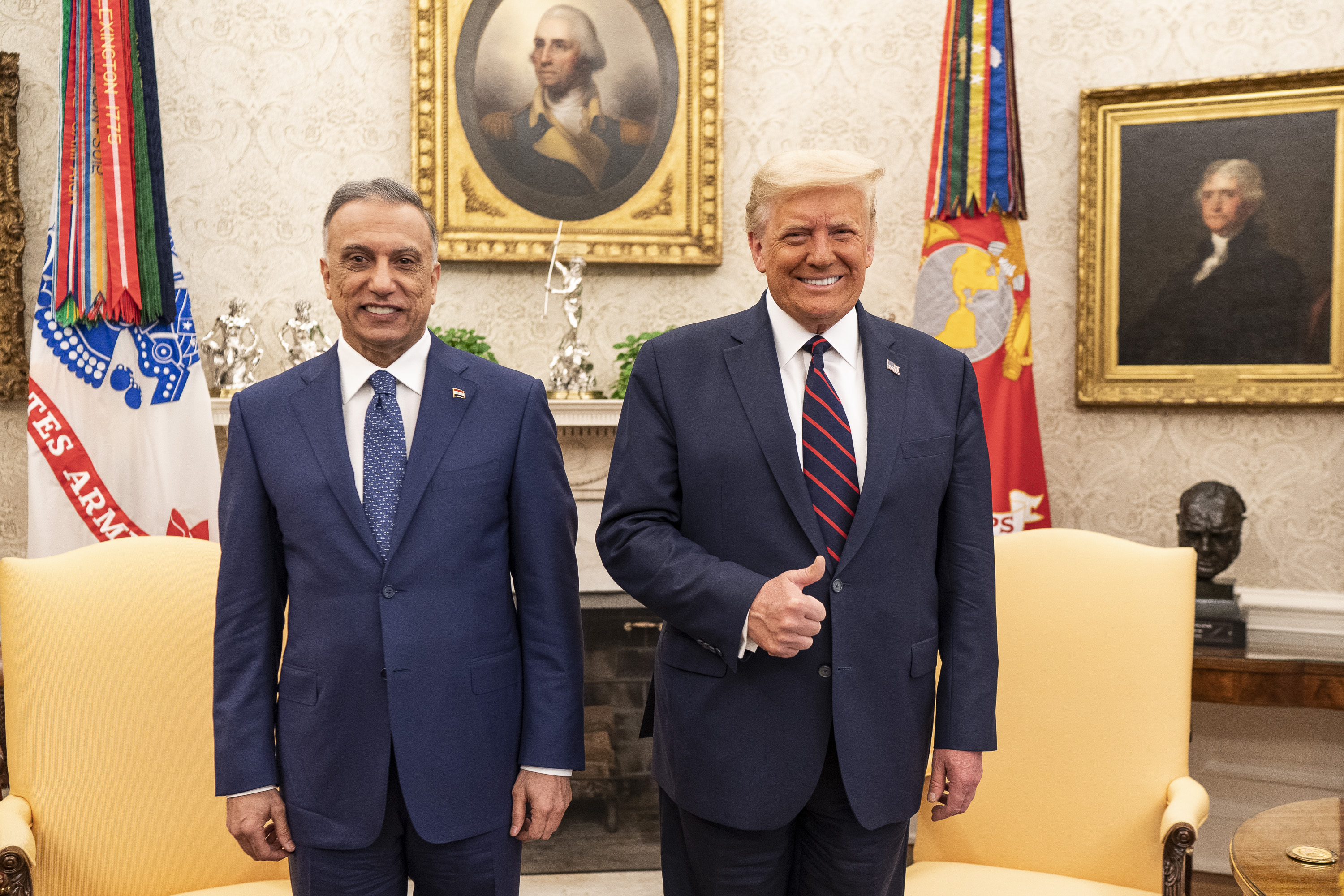
The highly unexpected victory of Donald Trump in the US presidential elections sent shock waves across the world, but for Iraq’s PM Haider al-Abadi, it unquestionably heralded the beginning of what promises to be a long-running painful nightmare.
The wave of protests sweeping across Iraq has led Grand Ayatollah Ali Al Sistani to demand that Abadi get serious about tackling corruption. But the prime minister's response so far has been far from reassuring.
The US Air Force stood idly by as ISlL swept towards Baghdad, but swiftly scrambled in August to launch airstrikes to halt an unexpected advance towards Irbil – capital of the Kurdish Regional Government (KRG).
Saudi Arabia must cover its tracks by not only forcefully denouncing ISIS and JN but actively introducing stiffer measures demonstrating that it is genuinely combating terrorism. How does this play out in terms of royal power?
Qatar’s new Emir swiftly congratulated the interim Egyptian president, Adly Mansour, who was appointed by the Egyptian army. This was in stark contrast to the fatwa issued on July 6, 2013 by Al Qaradawi, openly calling on the Egyptian people to defy the army and maintain support for Morsi.
Iraq, a decade after the US-led invasion and one year after the end of the US occupation, is grappling not merely with an escalating sectarian crisis between the Shia-led government and an increasingly disaffected Sunni minority, but with an intensifying ethnic crisis fomenting in an increasingly
Iraq, on the first anniversary of US withdrawal, is struggling to cope, not merely with a raging sectarian crisis between the Shia-led Central Government (CG) and an increasingly resentful Sunni-minority, but more alarmingly an ethnic crisis with a heavily armed and increasingly defiant Kurdish Re
In Saudi eyes any concession, no matter how insignificant, let alone a triumph by the Bahraini uprising, would definitely inspire its own Shia to rebel against the regime.