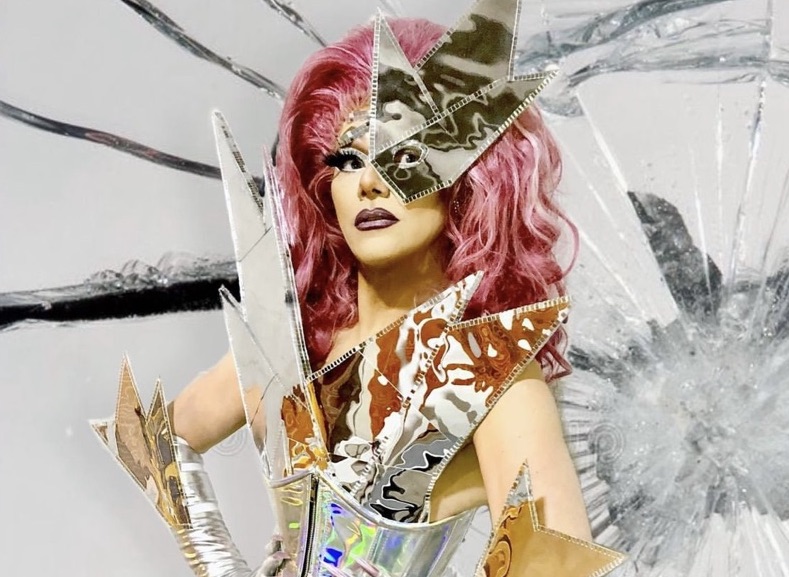
Bella DuBalle never dreamed of becoming an activist or playing a starring role in the battle against prohibiting drag shows in Tennessee, the southern state that became the first in America to pass such restrictions in March.
“I just wanted to play dress up,” DuBalle, an ordained minister and also the director and host at Atomic Rose, the largest drag club in Memphis, told openDemocracy. “But I’ve always believed that you need to be the person that you needed when you were little. And I didn’t have that.”
DuBalle – who, out of drag, is Slade Kyle and uses they/them pronouns – took on this unfamiliar part last month, as the backlash against the LGTBIQ+ community and their freedoms escalated to where Tennessee became the first state in the US to clamp down on their art.
The law was set to come into effect on 1 April, but was temporarily blocked on the same day by a US federal judge, ruling in favour of a Memphis-based LGBTIQ+ theatre company, Friends of George's, which filed a lawsuit claiming the statute violates the first amendment.
Issuing the temporary injunction, which lasts at least two weeks, district judge Thomas L. Parker, who was appointed by former US president Donald Trump, said authorities have failed to make a compelling argument as to why the state needs the new law. Friends of George’s is set to return to court to argue their case before they open their next drag-inspired production on 14 April, the performance group’s press statement said.
On 2 June, Parker rejected Tennessee’s so-called ‘anti-drag’ law as “unconstitutionally vague” and too broad, effectively striking down on the first-in-the nation law designed to restrict drag show performances. According to the original law, “male or female impersonators”, as well as topless dancers, go-go dancers, exotic dancers and strippers, who “provide entertainment that appeals to a prurient interest” will be banned from “adult cabaret” performances in public where children could see them.
The day the state governor signed the so-called ‘anti-drag bill’, on 2 March, he also signed legislation banning gender-affirming healthcare for trans teens, joining a growing list of conservative Republican-led states to ban such procedures. This is not the first time Tennessee has attempted to ban drag, and a similar bill from the 1970s has many in the LGBTIQ+ community fearful of the repercussions, particularly for trans people.
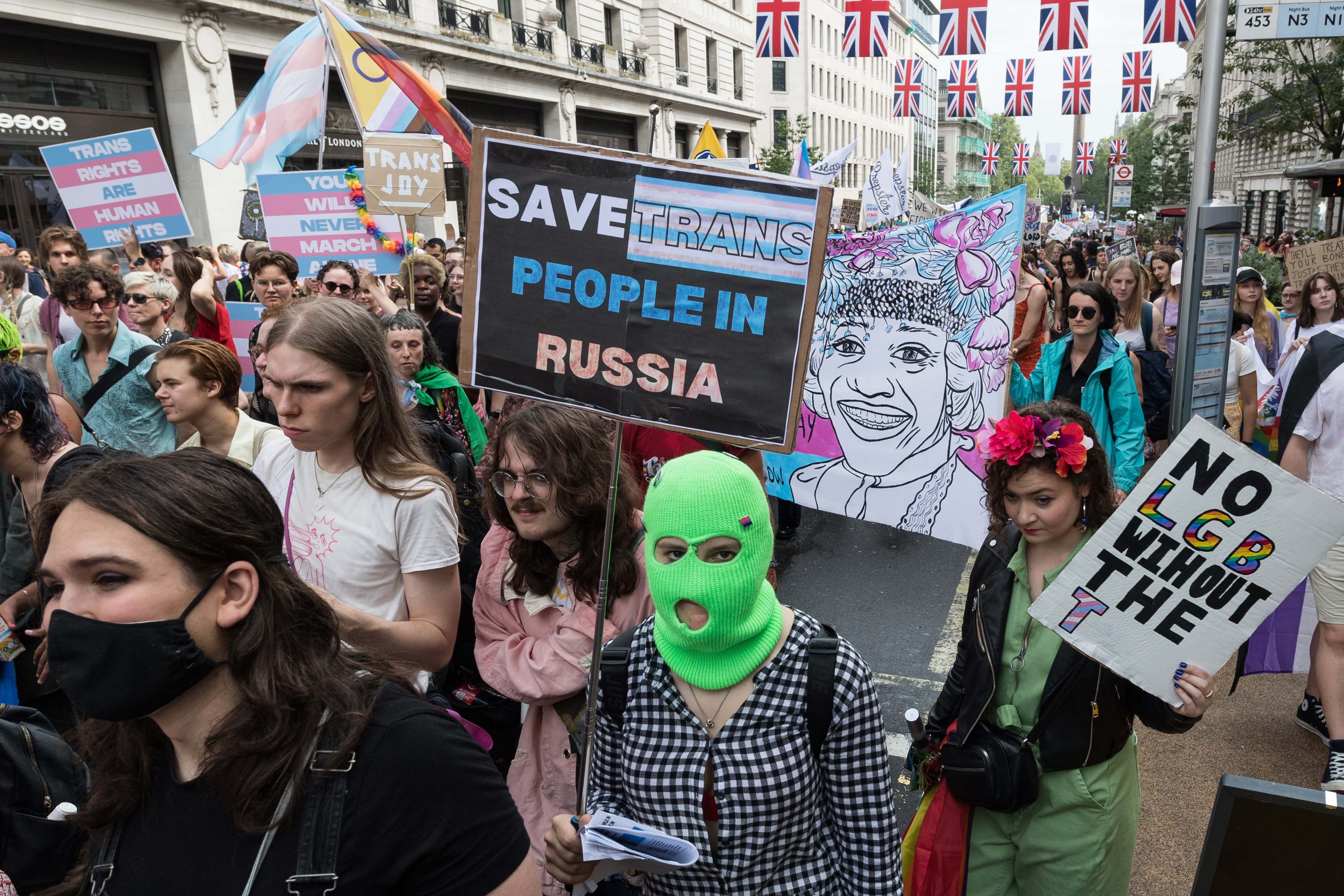
The bans came despite widespread protest, by Tennesseans like DuBalle and others. On 20 March, Hayley Williams, Hozier, Sheryl Crow and other American singers held a ‘Love Rising’ benefit concert hosted by RuPaul’s Drag Race alumna Asia O’Hara in the state capital of Nashville in support of the LGBTIQ+ community in Tennessee. The concert raised money for four Tennessee organisations working to fight the state’s ongoing legislative attacks against trans people and drag queens, Rolling Stone Magazine reported.
 Chrissy Stroop
Tennessee’s drag law explained
DuBalle said there has been a lot of confusion, fear, and misinformation spread about the temporarily-blocked law in Tennessee. If the law were to go into effect, drag performers could have been charged with a misdemeanour on their first offence, fined up to $2,500 (roughly £2,048), and face up to 12 months in jail. Subsequent violations could be felonies, punishable by up to six years in prison and fines totalling $3,000 (roughly £2,458).
But DuBalle says the legislation’s wording was “ambiguous” because it didn't explicitly name ‘drag’. Stella Yarbrough, the director of Tennessee’s division of the American Civil Liberties Union (ACLU), said in a statement that “the law bans obscene performances, and drag performances are not inherently obscene” nor “prurient”. The ACLU has vowed to “challenge enforcement of this law if it is used to punish a drag performer or shut down a family-friendly LGBTQ event”.
DuBalle has repeatedly said she won’t comply with the law if it were to come into effect and insists her shows are not sexual in any way. She has described her drag as part Miss Piggy of the Muppets, part Tennessee-native country star Dolly Parton, and part Mister Rogers, the late host of a popular American educational children’s TV show.
But other Tennessee drag and LGBTIQ+ groups have already cancelled their upcoming events over concerns about the law’s repercussions. Knox Pride Festival has considered pulling an annual event scheduled for October to celebrate Knoxville’s LGBTIQ+ community.
There have also been questions over whether the law would be enforced against theatre performers in shows that feature cross-dressing, such as ‘Hairspray’ and ‘Mrs Doubtfire’. The Actor's Equity Association, a national theatre union representing more than 51,000 people, said in a statement that it is ready to protect Tennessee members if prosecuted by the law.
Governor Bill Lee vowed to sign the bill into law days after photos from his 1977 high school yearbook resurfaced of him, then a senior, dressed in women’s clothing. Lee said it was “ridiculous” to conflate his photo to drag.
“When a straight man puts on a dress, it's comedy. It's a joke because he's saying, ‘look, now I'm becoming feminine. Isn't that funny? Because women are so weak,’” DuBalle said. “But when we do it as queer people, I'm like, ‘look how strong I am. Look how beautiful I am.’ That scares them.”
She worries most about how the law could be misused to hurt trans and non-binary people, like herself.
“If you’re looking at the idea that many of these people think that trans folks aren’t real, that they’re just an ideology, then I can easily imagine that they would look at a trans woman and say, ‘that’s a man impersonating a female,’” DuBalle said, referring to the speaker of the high-profile, right-wing Conservative Political Action Conference (CPAC), which took place earlier this month, who said: “Transgenderism must be eradicated”.
Almost 60% of transgender and non-binary youth in Tennessee seriously considered death by suicide in the past year and 25% attempted it, according to a 2022 national survey conducted by the Trevor Project, a leading suicide-prevention organisation for LGBTIQ+ young people in the US. The group’s research also shows that transgender medical care is associated with positive mental health outcomes and a reduction of suicide risk.
“For me, it’s just about trying to protect these kids,” said DuBalle who hosts a brunch for trans youth nearly every week at the Atomic Rose. “I keep hearing this narrative that this law is about protecting children. What about the queer kids? Do they not deserve to be protected?”
Tennessee’s forgotten LGBTIQ+ history
The new law would not be the first of its kind in Tennessee, says Sarah Calise, the founder of Nashville Queer History, a community organisation and digital portal, whose mission is to research and share the LGBTIQ+ history of Nashville and Middle Tennessee.
Drag was blossoming in Nashville in the 1970s
When Calise first heard about the legislation, she immediately thought of Nashville in the 1970s.
“Drag was blossoming in Nashville,” Calise, a non-binary and queer archivist who uses she/they pronouns, told openDemocracy. “At the same time, if you looked like a man but were dressed as a woman, you could have been arrested and charged.” This was because of the ‘female impersonation’ statute in the state.
The ‘Watch Your Hat & Coat Saloon’ – Nashville’s first gay show bar and dance club – was opened by drag artist Jerry Peek in 1971, in the city’s downtown, near Broadway, an area popular for nightlife. The venue existed for a couple of years before it mysteriously burnt down. Calise said Peek still did not know the cause of the fire.
Afterwards, Peek moved his drag shows to Printers Alley, a historic nightlife district where famous up-and-coming artists from Jimi Hendrix to Paul McCartney performed. That lasted for a few years until Peek eventually founded his own bricks-and-mortar building called The Cabaret, which thrived for decades.
“[Peek] really kicked off this drag era in Nashville in the 1970s,” Calise said. After people saw the success of the ‘Watch Your Hat & Coat’, they opened their own drag shows.
Meanwhile, drag queens had to carry around identification cards in the 1970s to show police officers that they were entertainers and not ‘female impersonators’ if caught in public, Calise said. Drag queens would arrive early to dress up and do their make-up at the club to avoid such confrontations with law enforcement.
Like DuBalle, Calise worries about the impact the law will have on trans people. She mentions the case of a trans woman, Jeannine Drake, who was arrested five times for ‘female impersonation’ between 1966 and 1975. Police had stopped enforcing the statute by the late 1970s, Calise said.
Calise founded the Nashville Queer History project in 2021 after Tennessee introduced a bill attempting to ban any LGBTIQ+ content in schools, whether it was literature or history or sex education.
“None of that was really being taught in Tennessee schools anyways, particularly with the history and sex education,” Calise said. As of 2021, only six US states require schools to teach a history and social science curriculum inclusive of LGBTIQ+ people and identities.
She spent that summer digitising more than 400 photos and clippings from Dare, Nashville’s first gay and lesbian newspaper, before publishing it on the Nashville Queer History website.
Calise says she did the work out of “sadness for not having that knowledge growing up because obviously LGBTIQ+ people have existed since human beings existed — just with different terms and language for it.”
“I really felt fear for the current queer youth here in Tennessee – I didn’t want them to feel like they were being dehumanised or that their history and culture were being erased. So I had to do something,” Calise added.
Maysa Pritilata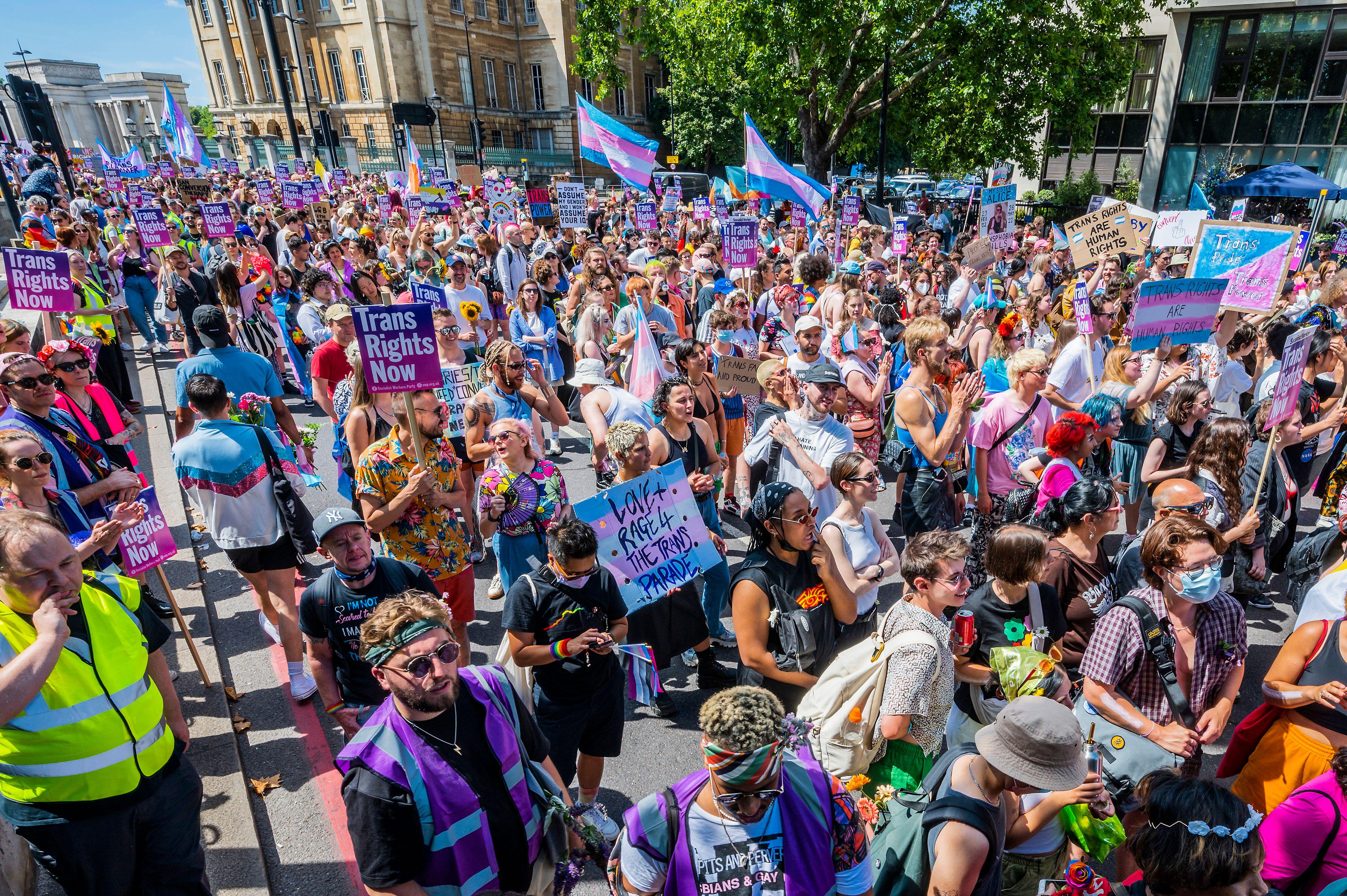
For Bella DuBalle, growing up queer in the south was hard. She had no examples of queer representation in her family, the public, or even the media.
“I spent a large majority of my youth thinking that I was the only person who felt the way that I felt and I was the only one. I was extremely, extremely lonely,” DuBalle, now 42, said. It wasn’t until she started doing drag 10 years ago that she felt she could express the feminine side that she had suppressed for so long.
“We as queer people have to go seek out our history – we have to be the carriers of that and make sure that the young ones know it because we’re not taught,” DuBalle said. “I think if most of these lawmakers knew what happened at Stonewall, just 54 years ago, they would not be so eager to try and repeat it.”
On 1 April, when the law was set to go into effect, DuBalle’s venue, the Atomic Rose, hosted Brick Ball, a drag show to protest the law’s enforcement and to commemorate the 54th anniversary of the Stonewall riot. It honoured Marsha P Johnson and Sylvia Rivera, two trans women and drag queens credited with throwing the first bricks as police raided the New York gay bar in 1969.
“We’ve already fought this fight. Why are we trying to go back to that? If we need to remind them, then we can do that,” DuBalle said.