

In December last year, the US House of Representatives passed the “Protect Children's Innocence Act”, a bill introduced by Republican representative Marjorie Taylor-Greene. If the title of the bill sounds Orwellian, it is because it is. A close reading of H.R.3492, as the bill is also known, indicates the proposed legislation wilfully conflates gender-affirming healthcare for young trans people with the harmful and outlawed practice of female genital mutilation and cutting (FGM-C).
If passed, experts told openDemocracy, the legislation will increase suffering among two vulnerable groups: women and girls at risk of an extreme form of gender violence and trans young people, who are already more likely to experience suicidal thoughts and attempts than their cisgender peers.
Under the bill, medical staff providing such care can be punished with up to 10 years in prison. Parents will be charged only in cases relating to FGM-C, not gender-affirming care for trans youth.
The bill was passed 216 votes to 211 on 17 December, mostly on party lines, although three Democrats voted in favour and four Republicans voted against. It is now with the Senate Judiciary Committee, with no schedule for debates or votes.
Mona Sinha, executive director of Equality Now, told openDemocracy: “For a few years now, we have seen anti-rights groups attempt to widen existing anti-FGM bills to include gender-affirming care, creating significant confusion among lawmakers and the public.”
If the bill is passed, Sinha warned, “it would undermine the legitimacy and integrity of existing anti-FGM enforcement efforts”, because “politicising a law meant to protect girls from a harmful practice rooted in gender inequality would divert already limited resources and attention away from FGM and instead focus on criminalising medically necessary health care”.
 Diana Cariboni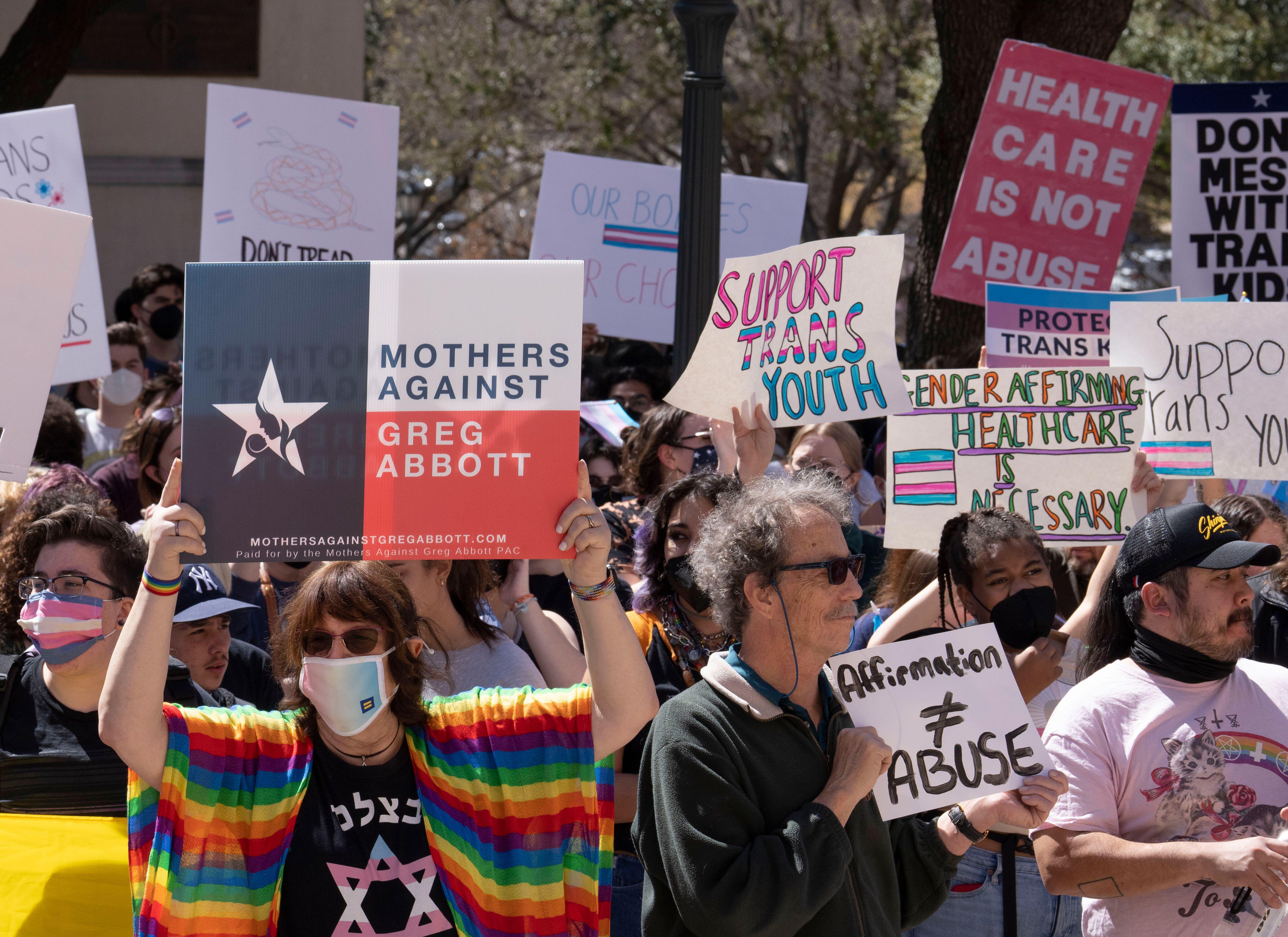
The World Health Organisation defines female genital mutilation as “a traditional harmful practice that involves the partial or total removal of external female genitalia or other injury to female genital organs for non-medical reasons”. This practice, which affects more than 230 million women and girls globally and is sometimes seen as a rite of passage to womanhood, has no health benefits; rather, it is a violation of human rights that creates both short-term and enduring physical and emotional impacts.
In the US, the practice has been illegal at a federal level since 1996, and forty-one states have introduced laws to ban it. In 2020, a federal law was passed to strengthen protections for victims, known as the Stop FGM Act. Despite this, several studies estimate that around half a million women and girls are survivors or are still at risk of FGM-C nationwide.
Now, Republicans are misusing the justified opposition to female genital mutilation to target trans people as part of a wider strategy to weaponise transphobia to win votes.
“Hundreds of bills were introduced primarily in conservative states to restrict or, in some cases, criminalise the delivery of [medical] care to this population,” explained Marci Bowers, a gynecologic and reconstructive surgeon at the Mills-Peninsula Medical Center in California and a former president of the World Professional Association for Transgender Health.
Some of these bills have blurred the lines between FGM-C and trans healthcare. In 2022, the year after Texas governor Gregg Abbott and other Republicans in his government began using the expression “genital mutilation” to refer to gender-affirming healthcare, openDemocracy reported on a state-level bill introduced in Texas that removed the definition and the word “female” from “female genital mutilation” in order to criminalise trans healthcare. While that bill was never passed, the following year, we reported on a similar bill in Idaho, which was signed into law and is still being challenged in the courts.
It is worth remembering that the vast majority of gender-affirming care for trans youth in the US is social affirmation, such as changing clothes, hairstyles, names, gender pronouns and enabling access to bathrooms. Very few trans under-18s receive gender-affirming hormone therapy or surgical procedures, and where they do take place, they are considered on a case-by-case basis, rather than being a routine offering.
Fewer than 3,680 under-18s in the US received any form of gender-affirming surgery between 2016 and 2020, according to researchers from the Columbia University College of Physicians and Surgeons, who analysed data from the Nationwide Ambulatory Surgery Sample and the National Inpatient Sample. More than 3,200 of these cases were breast or chest surgeries, and most recipients were likely cisgender. Some 97% of breast or chest surgeries performed on under-18s in the US are reductions for cisgender male youth, according to an analysis of 70 million nationally representative medical insurance claims from 2019 by the Harvard TH Chan School of Public Health. That study found little to no utilisation of gender-affirming healthcare for trans minors.
Puberty blockers and hormones are also rarely prescribed to US trans adolescents, according to another study by Harvard TH Chan School of Public Health, Harvard Pilgrim Health Care Institute, and FOLX Health, published last year.
Even so, transphobia is a central part of the Trump presidency’s legislative agenda. One week after he was sworn into office in January 2025, his White House issued an executive order that branded gender-affirming care as “mutilation” and ordered the Department of Health to remove a 2022 definition that acknowledged gender-affirming care to be “crucial to overall health and well-being” of transgender and nonbinary children and adolescents. While a court order days later forced the Trump administration to reluctantly reinstate it, along with relevant guidance and literature, its restoration did not signal lasting change.
Within three months, the attorney general had instructed the Department of Justice to prosecute healthcare providers offering gender-affirming care under the federal Stop FGM Act. Taylor-Greene’s bill is now seeking to codify this instruction and make it legal and mandatory for prosecutors to begin opening cases under this conflation.
“Survivors fought really hard in this country for many years to get that law,” said Kaitlin Mitchell, policy and advocacy coordinator of the US End FGM/C Network, who opposes Taylor-Greene’s proposed legislation. “So when we use the word ‘mutilation’ to mean gender-affirming care and female genital mutilation, or to refer to both, we’re taking away from the specific practice of FGM.”
Sian Norris
The new bill has been endorsed by several groups opposed to equal rights, including three with links to Trump’s authoritarian blueprint Project 2025. But the weaponisation of FGM has been ignored in discussions about it. “In all of the debates that happened on the house floor and in the rules committee the day before, in everything that we're seeing online, one thing that has not come up once is the impact of this bill on FGM-C survivors,” said Caitlin LeMay, the executive director of the US End FGM-C Network.
LeMay added: “We are also blurring the lines around consent and bodily autonomy, because FGM is a non-consensual form of violence against children, and gender affirming care is an evidence-based form of life-saving healthcare.”
Bowers of the Mills-Peninsula Medical Center said gender-affirming care had been found to be beneficial for those who receive it. “There is supporting medical evidence, and when you talk to these families and to the individuals themselves, there is improved psychosocial function and self-image,” she told openDemocracy.
“The lack of access to medical care for trans youth causes an increase in suicidality,” she added.
A 2023 study by the Williams Institute at UCLA School of Law found that 42% of trans adults in the US have attempted suicide – four times as many as cisgender adults – and more than 81% have thought about it.
Trans young people are particularly vulnerable, with state-level anti-trans laws – such as those limiting access to gender-affirming care, or to bathrooms and sports teams that match a person’s gender identity – leading to a rise of up to 72% in incidents of past-year suicide attempts among transgender and nonbinary youth, according to a 2024 study by the Trevor Project, which works in suicidal prevention for LGBTIQ+ young people.
On the other hand, several other surveys by the Trevor Project have found that welcoming homes, schools and access to care for gender-non-conforming children and young people reduce suicide risks and mental health suffering. Similarly, suicidal ideas fell drastically among trans kids and young adults (between 12 and 20 years old) who began receiving hormone therapy, a study published last year by the Journal of Paediatrics found.
Yet politicians in 26 states have already banned proper health care for trans youth – and the situation is only getting worse.
“It's having a huge effect,” Bowers told openDemocracy, “not only psychologically on the patients who now feel even more distanced from the medical care, but that's an overview of what's generally happening in the erosion of trust in medical care, in science, in the data and the experience that we have with a wide variety of issues”.
In some cases, providers can lose their licences or be charged with a felony.
“This is a continuation of the practices that conservatives in our current government have been drifting towards, inserting lawyers and politicians between doctors and medical decision-making”, Bowers added.


