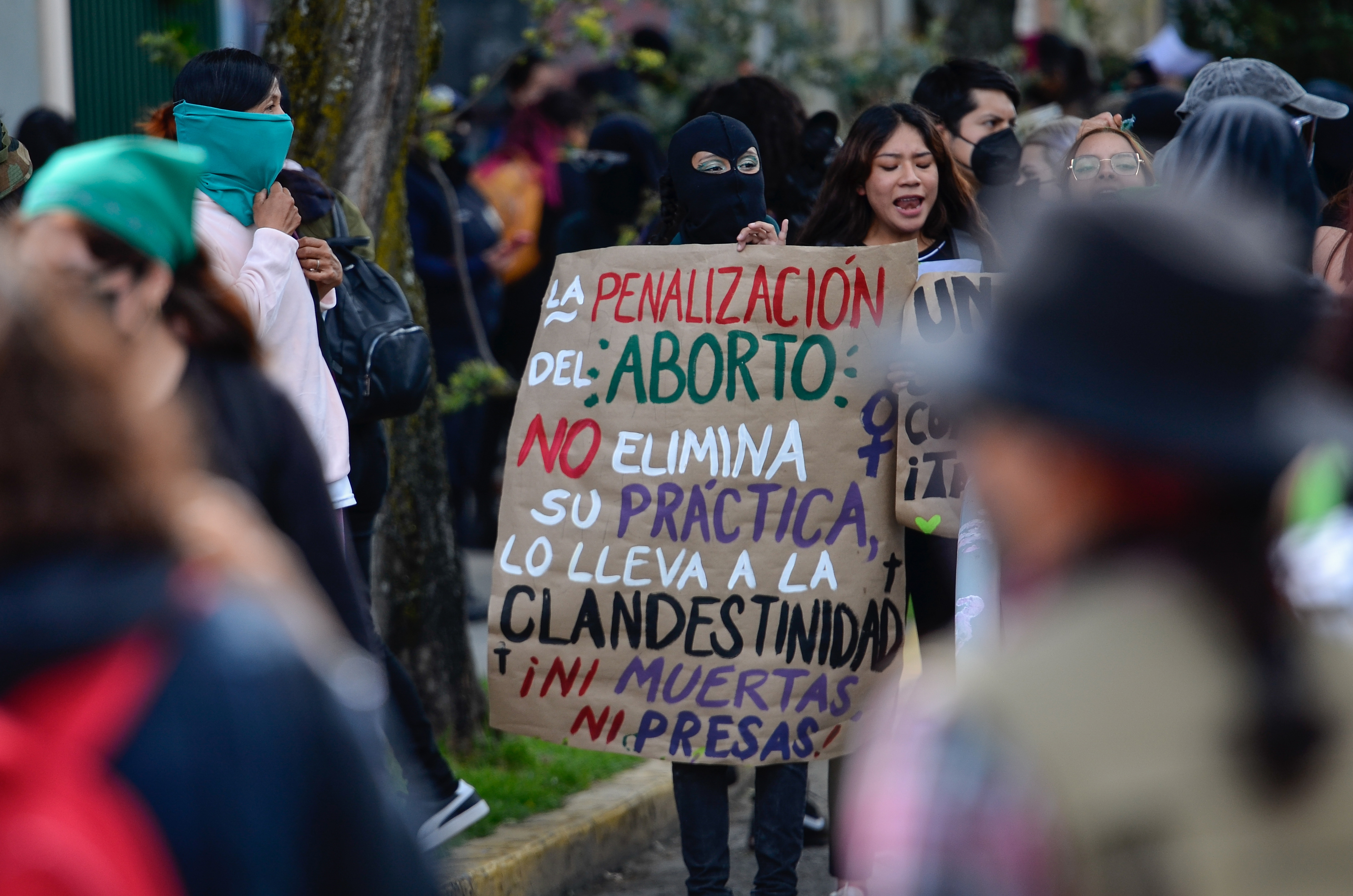
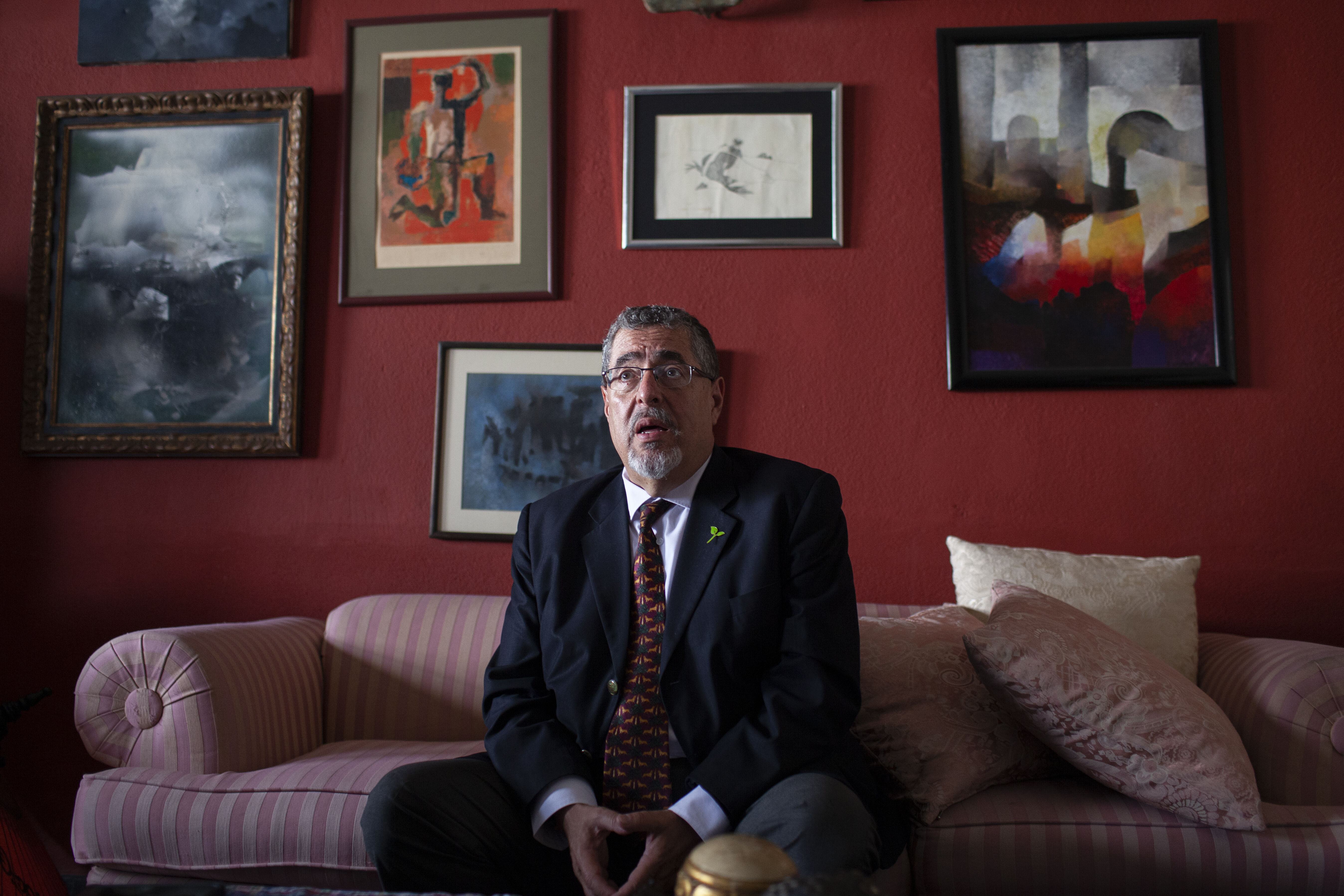
Dora María Téllez, a renowned former Sandinista guerrilla commander, historian and leader of the left-wing Unamos political party, was released this month after 605 nights in El Chipote prison in Nicaragua's capital, Managua.
Charged with treason and kept in solitary confinement, her life was reduced to daily exercise and eating scraps of food in her small cell. Hygiene facilities were poor.
Her only real human interaction was with her interrogators.
As a queer political dissident, she was held in the men's cell block, and was often asked questions about her love life during interrogations. Despite the threats and hardship, Téllez says she always refused to answer or cooperate with her jailers.
“The regime has a deep-seated hatred for female political leaders and, in my case, they are also homophobic, despite pretending otherwise,” she told openDemocracy.

On 9 February 2023, the Nicaraguan government released 222 political prisoners, including Téllez and 20 other women, revoked their Nicaraguan nationality and banished them to the United States. International organisations have slammed the Nicaraguan authorities for violating the rights of these activists, politicians, journalists and peasant leaders who oppose the leadership of president Daniel Ortega.
Ortega, a former leftist guerrilla commander during the Sandinista Revolution of 1979, was president in the 1980s and then re-elected in 2006. Despite his left-wing political rhetoric, he has become an ally to conservative groups and even supported an absolute ban on abortion in 2006 to secure the Catholic Church's support to help him win the elections.
openDemocracy had the opportunity to interview the released prisoners during the three days they spent in a hotel in Washington, DC, before heading to the homes of family and friends in the US.
El Chipote, notorious for inhumane conditions and allegations of torture, made headlines last year when the former guerrilla commander and colleague of Téllez, Hugo Torres, died on 12 February 2022, after allegedly being denied proper healthcare while in custody.
Women released and exiled this month told openDemocracy that they had been subjected to solitary confinement, while LGBTIQ+ political prisoners faced verbal abuse and interrogations about their activism and emotional ties with other activists. Female political activists jailed in other prisons in the country have also described mistreatment, segregation and isolation.
Activist Yader Parajón, who spent 17 months in El Chipote, spoke out against Ortega's ultra-conservative and macho stance. “Ortega considers feminists and LGBTQ [people] as enemies to pander to the political and economic powers in this country. He wants to please these ultra-conservative, macho groups,” he said.
The way to freedom
The unexpected release of the prisoners was a tense and emotional affair. Samantha Jirón, a 22-year-old journalism student and activist, was the youngest of the group. She said she was awoken by guards at La Esperanza women's prison and ordered to get dressed quickly. She was then told to keep her head down and was rushed to a bus. When she briefly lifted her head and saw a soldier, she feared the worst.

“I thought they were going to shoot us; they were going to kill us,” she said.
Activist Evelyn Pinto, also imprisoned in La Esperanza, had the same fear until guards handed her a paper saying that she and the rest of the group were going into exile. At Managua’s military airport, US officials met them and informed them they were being sent to the United States.
The unprecedented release came amid a wave of international pressure over the conditions in which they were being held, with human rights organisations calling for accountability from the government led by Ortega and his co-president and wife, Rosario Murillo.
At least 30 people, including a Catholic bishop who refused release as a protest, remain in jail as political prisoners.
Téllez, Parajón, Jirón, Pinto and the others who have been released face an uncertain future in the US.
“I have mixed feelings [amid the] happiness,” said Jirón. “I had imagined that I would be going with my mom, who is still in Nicaragua. So it's bittersweet because I still fear for my family, and I love my country. I love it so much that I’ve made many sacrifices, like being in jail. I didn’t want to leave Nicaragua.”
Homophobia, misogyny and mistreatment
Nicaragua maintains a high ranking for gender equality on the World Economic Forum’s Gender Gap Report 2022. However, the treatment of political prisoners exposes a different reality.
Parajón became an activist when he joined pensioners and student demonstrators in April 2018 to protest the reform of the pensions system. He and his brother Jimmy delivered food and aid to those fighting for their rights. Tragedy struck when Jimmy was shot dead during a protest on 11 May of that year. The family held the authorities responsible, and Yader Parajón began asking for justice.

His activism led to his capture on 4 September 2021 by police officers who he says subjected him to beatings and homophobic slurs. “Even during interrogations, they tried to link me with political figures, as if I were their sexual partner, but they did this to mock me, as an act of humiliation,” Parajón said.
He was sentenced to ten years in prison for treason and sent to El Chipote. There, he was confined to a tiny cell with only a small hole in the ground as a toilet. He was repeatedly subjected to homophobic slurs. Once he asked for water, and the guard told him he would not get water until he “talked like a man”.
Feminist lawyer Ana Margarita Vijil, a member of the opposition Unamos party, spent 605 nights in El Chipote serving a sentence for treason. She said that most women political prisoners were kept isolated for at least 18 months.

“We were viciously treated. We were treated even worse than presidential candidates imprisoned by Ortega. They wanted to demoralise us, but they couldn't. Why? That’s a question for Ortega.”
Detainees at El Chipote were denied family visits for extended periods of up to 90 days. And when visitors were admitted, they were subjected to strip searches.
For the president of the Unamos party Suyen Barahona, the loss was devastating. She said she and other detained mothers could not see their children or even receive a picture of them for more than 18 months. In December, she was finally allowed a video call with her six-year-old son, before being reunited with him on 9 February in the US.
“My son didn't recognise me. He was in shock. The last time he saw me in person, policemen were dragging me away,” she said. “It was a political decision and one of the greatest cruelties. There was no legal justification.”

Interrogators often used her family as a talking point and repeatedly accused her of being a bad mother because she was “a traitor to Nicaragua” who preferred prison to raising her child.
Barahona said interrogators wanted her to reveal the names of members of her party and her links with feminist groups. There were frequent references to women’s organisations as targets to be destroyed.
“There was much, much viciousness against women's organisations,” she said. “They wanted to link them with political organisations, although this is not the case.
Barahona described how guards in El Chipote used food as a weapon. In the more than 20 months she was incarcerated, she said guards would feed her crumbs for weeks and then suddenly offer overly large servings. She was also kept in isolation and silence.
 Dánae Vílchez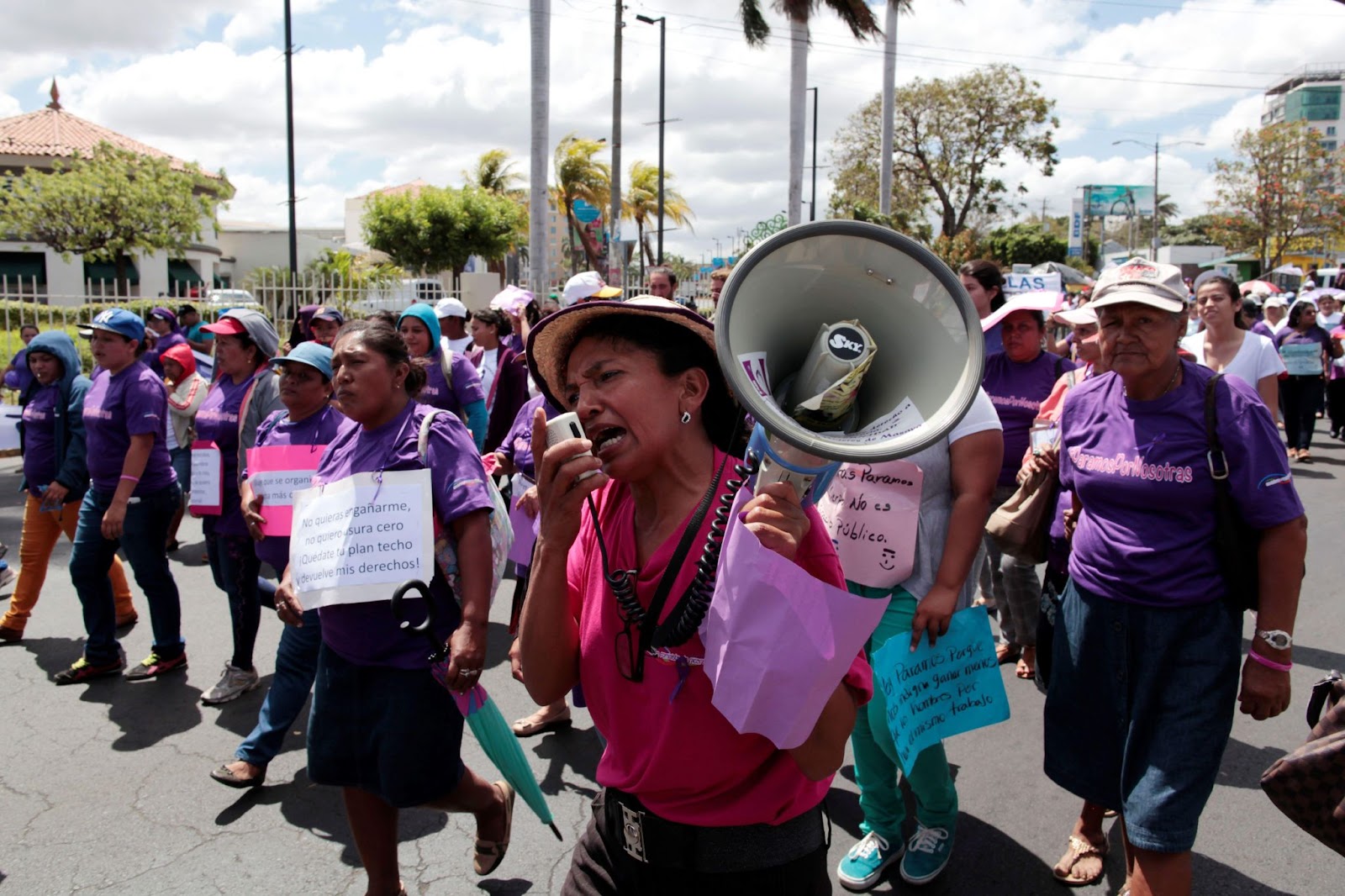
Women detained in prisons other than El Chipote were allowed to receive food from their families, have regular visits and share cells with other inmates – though they were forbidden to talk to them.
Evelyn Pinto, detained in La Esperanza for her involvement in solidarity networks that provided food to political prisoners, recalled feeling surrounded by people but still utterly alone. This sense of isolation and disconnection is a common experience for political prisoners in Nicaragua, where access to basic human rights is often restricted.

Also in La Esperanza, guards warned other inmates not to speak to Jirón because she was a traitor. She said this imposed silence made her feel as if she was infected with a contagious disease.
Resistance and solidarity across ideologies
Téllez believes Ortega still has a path to a peaceful way out of politics if he holds free and fair elections and relinquishes his hold on power. She was among the group that overthrew the Somoza family dictatorship in 1979, but now finds herself fighting against a former comrade who has slowly dismantled democratic institutions over his years in power.
Ortega completely controls the judiciary, the police and the army. His response to the 2018 anti-government demonstrations led to the massacre of at least 325 people.
Meanwhile, women activists like Barahona remain committed to their cause. She said her time in prison had strengthened her resolve to achieve a free Nicaragua, and she emphasised the importance of focusing on love for her country rather than being filled with hatred or anger. “It strengthens my commitment that no one else should have to go through this experience I’ve been through,” she said.
Vijil also highlighted the solidarity and camaraderie built behind bars with fellow detainees and the importance of positivity. “You hold on to the signs,” she said. “At least that's how I survived, seeing beauty in small things and realising something very important: I learned that you can always be thankful. No matter how bad things are in life, there will always be things to be thankful for.”
Téllez also had a constructive message: “People from various backgrounds and ideologies, including professors, young people, feminists and religious figures of all colours, have been showing their support by praying for our liberation. The message is clear: solidarity can overcome ideological divides and bring about the change we need.”