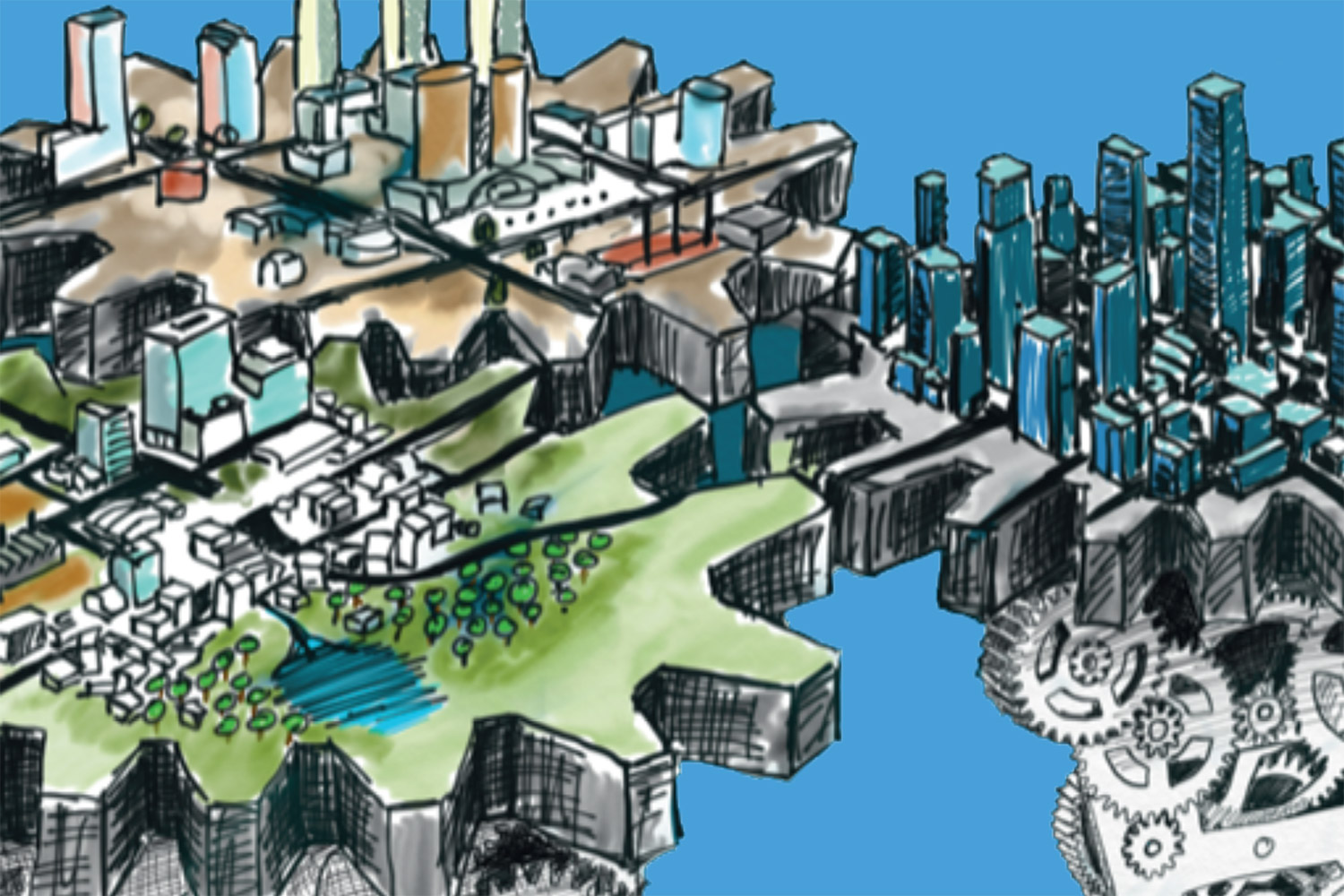
Changing the world for the better has never been easy. There are numerous obstacles that need to be overcome before any kind of meaningful change can take place. These obstacles include resistance, inertia, and self-interest, along with further complications associated with leadership, strategy and organisation. It has also become clear, moreover, that even landmark campaigns routinely fall short of their ultimate goals, and therefore routinely end up with partial or qualified gains. Even high profile causes that have been widely celebrated as successful milestones, such as long-term challenges to legal slave systems or European colonial rule, have nonetheless been questioned in relation to both the racial afterlives of enslavement and the continuing legacies of empire.
Efforts to change the world are often described and analysed in terms of ‘repertoires of contention’, which is a concept developed by Charles Tilly. Whenever people seek to change the world they draw upon established tactics, strategies and performances – a repertoire – in order to advance political demands. Examples of repertoires of contention include boycotts, petitions, court challenges, meetings, strikes, occupations, marches, blockades, riots and rebellions. As these examples help to illustrate, repertoires of contention are frequently geared towards disruption, with the primary goal being to prevent or undermine the smooth and regular operations of the established political, economic and social order. These disruptions are frequently unpopular, and they can sometimes provoke violent reactions, but they nonetheless challenge business as usual.
Many of the most popular ‘solutions’ for combating modern slavery do not challenge business as usual. This includes corporate social responsibility, ethical consumption, technological innovation, and raising awareness. In an inversion of Tilly, they instead comprise repertoires of non-contention, since they are undemanding and politically non-threatening. If you search the internet for ‘things I can do to end slavery/trafficking’ you will quickly end up with many numerical lists of actions you can take. While not all lists are the same, they nonetheless tend to share some common features, with the most recommended ‘actions’ including 1) praying, 2) learning more, 3) informing friends and colleagues, 4) consuming ethically, 5) reporting suspicious cases, 6) writing to public officials, and 7) donating. None of these actions are especially disruptive or demanding. There is a fundamental mismatch between underlying system and popular ‘solution’.
Further complicating matters, governments have been able to leverage campaigns against human trafficking and ‘modern slavery’ to support other agendas, such as ‘building a wall’ (including Trump’s fantasies about duct tape) or ‘stopping the boats’ in the Mediterranean. Official efforts to prevent movement across international borders are not motivated by humanitarian concerns regarding the plight of vulnerable migrants, but they have nonetheless been justified in anti-trafficking terms, providing an ‘humanitarian’ veneer to policies and practices which routinely end up hurting, rather than helping.
Forced and precarious labour are the product of systems which can only be effectively challenged via political disruption. Unjust laws governing migration need to be overturned. Global systems of production and exploitation need to be challenged. Corporations need to be held accountable. Criminal sanctions and social stigmas that leave sex workers vulnerable must be overturned. Rights, protections and recognition should support all workers and migrants, rather than attempting to target exceptional cases of individual abuse, deviant criminals, and ‘bad apple’ employers. Workers and migrants have been organising against exploitation and abuse for a very long time, so any conversation about different strategies should prioritise their expertise and experience.
The classroom
Part 1. Introducing week eight
Length: 11:05
Part 2. Challenging the root causes of forced and precarious labour
Length: 11:39
Essential readings
- Confronting the root causes of forced labour: where do we go from here? by Genevieve LeBaron, Neil Howard, Cameron Thibos, and Penelope Kyritsis (2018).
- No easy answers for ending forced labour in India by Collected Activists and Academics, openDemocracy (2017).
- Organising beyond silos: confronting common challenges amongst migrants and workers by Global Alliance Against Traffic in Women, openDemocracy (2019).
Further information
- Organising precarious workers in the Global South, openDemocracy (2020).
- Introduction: do the hidden costs outweigh the practical benefits of human trafficking awareness campaigns? by Joel Quirk and Elena Shih, openDemocracy (2017).
- Expanding the map: how funders can ensure quality work for all by Sienna Baskin, openDemocracy (2019).
- Wage theft: the missing middle in exploitation of migrant workers, Beyond Trafficking and Slavery by Benjamin Harkins, openDemocracy (2021).
- The art of using supply chains to defend worker rights by Kathryn Babineau and Jennifer Bair, openDemocracy (2020).
- We should all be deported by Darshan Vigneswaran, openDemocracy (2017).
- Decriminalisation and labour rights: how sex workers are organising for legal reforms and socio-economic justice by Luca Stevenson, openDemocracy (2019).
- Are you better or worse off? Understanding exploitation through comparison by Joel Quirk, openDemocracy (2020).
The course was originally released on the edX.org platform in 2018, where it has now been archived. As of 2021 it is available on openDemocracy.