
It’s becoming more and more apparent that there is no longer a global consensus – particularly in the increasingly far-right-leaning West – on the basic human rights that we all thought we were guaranteed.
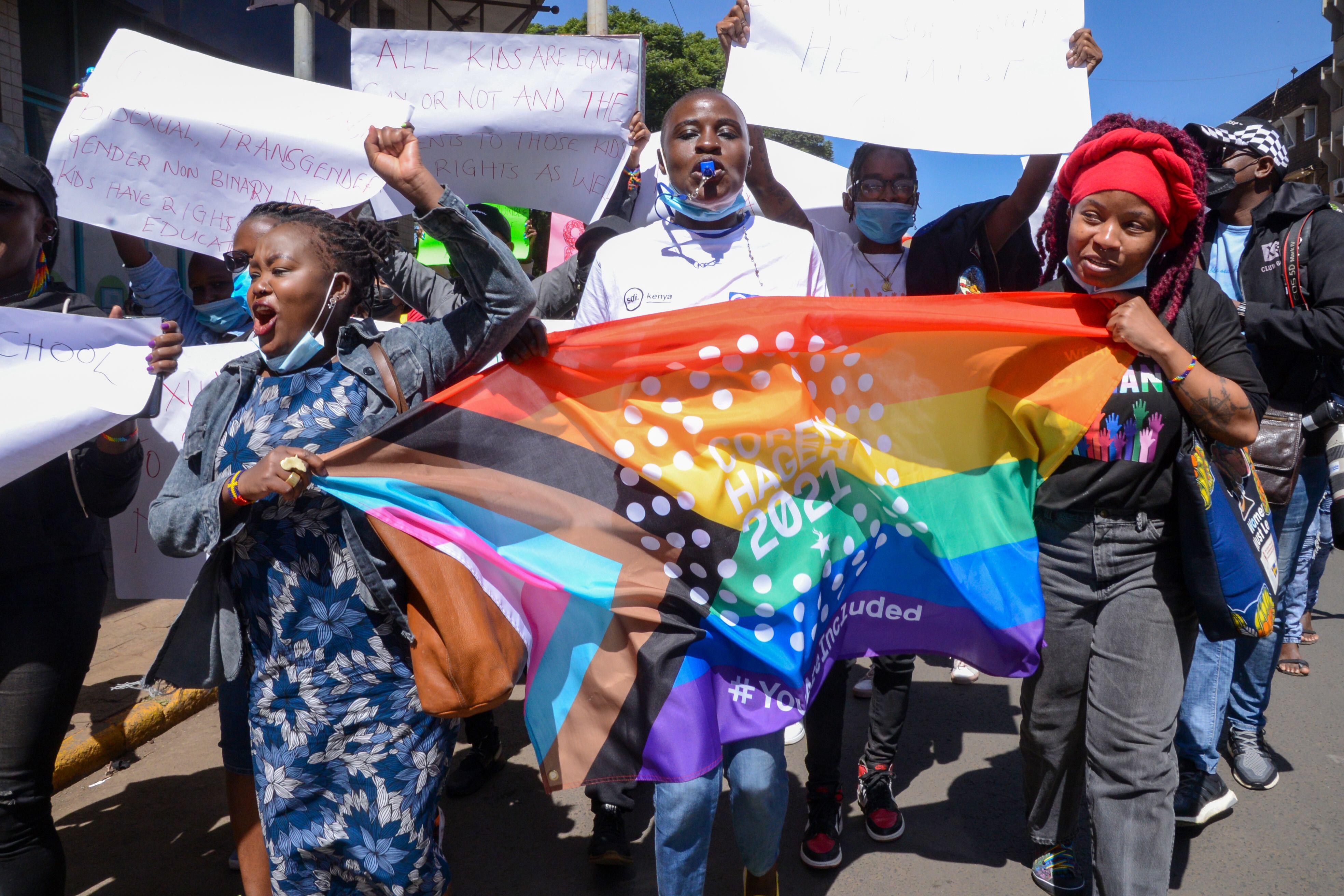
Freedom from discrimination? This week, the US Supreme Court legitimised race as a reason for immigration officials to search, detain and eventually deport those they suspect to be undocumented migrants. The right to dignity, expression, and equality? Burkina Faso just became the latest country to make it ‘illegal’ for people who identify as LGBTIQ to express themselves. In some countries with particularly extreme laws, even parenting a queer person is outlawed. And there seems to be a concerted effort by powerful, well-resourced European and American Christian non-profits to erase trans people – women especially – from public life both at home and overseas.
We are living through an extraordinary, historic deficit of collective compassion. For the Black Feminist Fund, an international philanthropic organisation founded in 2021, this is the time to get to work. The organisation believes that by giving money to Black feminist movements carrying out intersectional, social justice work around the world, we all benefit: women (including trans women), girls, marginalised demographics, poor people. All of us.
The Black Feminist Fund’s research has found that 0.1%-0.35% of global funding is used to support Black women, girls and trans people. It hopes to show other philanthropic organisations how this can and should be changed.
A few months ago, the organisation announced a $16m Sustain Fund that seeks to provide eight years of core support – an unusually generous commitment – to non-profit organisations. The fund is also atypical in that it will not only consider formally registered organisations that meet the stringent documentary, tax and corporate governance requirements and standards to which grant-receiving non-profits are held, but also unregistered organisations that normally fall outside the scope of most grant-giving organisations.
The Black Feminist Fund says we all have to “meet the moment with courage”. In this conversation with Hakima Abass, co-founder of the Black Feminist Fund, we discuss exactly how to do so.
This interview has been edited for length and clarity.
What does it mean to “meet this moment with courage”?
We are seeing coordinated concerted attacks on, I would say, human rights generally, but specifically on racial and gender justice. These attacks have built up over the last decade or two, and particularly target women – Black women, Black trans women – gender-expansive and impoverished people. So we find ourselves in this moment of that concerted attack.
At the same time, I feel that we've also found ourselves in this moment of abundance of Black feminist leadership, of Black feminist thought, of Black feminist resistance, and of Black feminists creating alternatives. So it’s both things happening at once in this moment. I guess for us it’s a question of: which side are you on? And we want to be on the side of justice and of equality.
You seem to not only want to meet this moment as a fund, but to galvanise others to join you. Are you seeing a response so far? Are you optimistic that people will answer the call?
We are particularly calling on philanthropy and donors to join us. In a sector that’s very mainstream, that’s in some ways apolitical, or can be apolitical, there's a way that philanthropy can move from a space of compliance or of trying to hold the middle ground. And what we're also saying in this moment is that compliance with injustice is complicity. So we need folks who are going to be able to step up to meet the moment boldly, unapologetically.
And in terms of whether I'm seeing hope, yes, I am. I think that there's also a base of Black women and gender-expansive people who are in philanthropy, who are organising from within and trying to really leverage resources for Black feminist movements. I think that philanthropy is also in a moment of different spaces, different foundations, different donors, questioning what they should be doing. But we know that in the landscape of funding, and let alone in the landscape of money in the world, it's only peanuts going to Black feminist movements. So we did some research. We found that 0.1 to 0.35% of all global foundation funding goes to support black women, girls and trans people. I'm hoping that people are seeing the impossibility of continuing this deeply unjust and unequal system, and that that will galvanise people to also understand that the solution comes from the most oppressed.
What are some examples of the solutions that you’ve seen – and particularly that you’ve been inspired by – that the fund has supported, and that more people should be supporting?
In Ghana, we see this horrendous (anti-LGBTIQ) hate bill they’re attempting to pass. It looks like they might be able to pass it this year. That's been a global attack, mostly fuelled by white supremacist fundamentalist groups in the US. There's also an exchange of resources to enable fundamentalists and others in Ghana to put this forward and to advance this agenda. And we know that the agenda is one that actually goes even beyond LGBTIQ lives. This agenda would mean increased surveillance. It would mean criminalisation and policing. This started in Uganda. If this passes in Ghana, we also know the domino effect: it's moving to Kenya and Benin and Togo. We know again that this is like a transnational attempt to impose white supremacist Christian fundamentalist values on African peoples and populations and communities.
We partner with a group in Ghana that is particularly working on intersex people's rights. They did a lot of community mobilisation and education – not just with chiefs, traditional leaders and religious leaders, but also with ordinary people – around what being intersex means. They managed to roll back the ways in which intersex people were being named in this bill, but they haven't stopped there because they know that this bill is anti-democratic, anti-human rights. So it’s not just that they want the removal of intersex people in the bill, which they've achieved; they want the bill in general not to be passed. So they're continuing to do that work within the community, with others in Ghana, to make sure that that happens. To me, that's inspiring and important because it does have ramifications even beyond Ghana. I think the impact of being able to stop this bill in Ghana would have an impact in other places. And we can learn lessons from the organising that's happening in Ghana and the ways in which Black feminists in general are mobilising and educating to show people that these are far-reaching bills that are deeply undemocratic and have nothing to do with African cultures, traditions, values, quite the reverse.
You do something that most big ‘blue-chip’ non-profits don’t: you also fund unregistered organisations. How or why do you work with organisations like these?
Registration is obviously a legal framework in relation to the state, but we know that many Black feminist movements cannot register because they are criminalised – either because their identities (such as LGBTIQ identities) are criminalised or because the work they support is criminalised (such as sex work) or because activism and dissent are criminalised in some contexts. So we wanted to make sure that we can serve Black feminist activism and movements wherever that’s happening, especially in contexts where it means that they're working in these conditions of repression.
Now it's complicated and difficult to do. Philanthropy sometimes shies away from the difficult, putting the administrative burden and the complications on the groups and the movements. So we are trying to flip that. The flip is a question of risk. Philanthropy is very risk-averse. Philanthropic organisations talk about risky contexts as if they're the ones engaging in the risk, but it’s the activists who are the ones facing those risks. We want to support groups that are at risk and do the work.
You are committing to supporting organisations for eight years from the get-go, another unusual approach in philanthropy. Most get (at most) three-year grants that could be renewed.
We think it's really important for groups in terms of their ability to be strategic and agile and responsive in their context, to have that commitment from the get-go. In the first year of partnership, we try to get to know each other. Then, we do accompaniment work: learn, exchange, share ideas.
At the six-year mark, we talk about what exiting will look like. So we want to be as deliberate and intentional about the way we onboard partnership as the way we offboard partnership, because we want our movement partners to be in a better place as they leave, as defined by them, not generated by us. For some, it would look like more funding, but for others, it may look very different. And we want to make sure that as we end the partnership, we’re doing that deliberately and intentionally, with their goals in mind.


