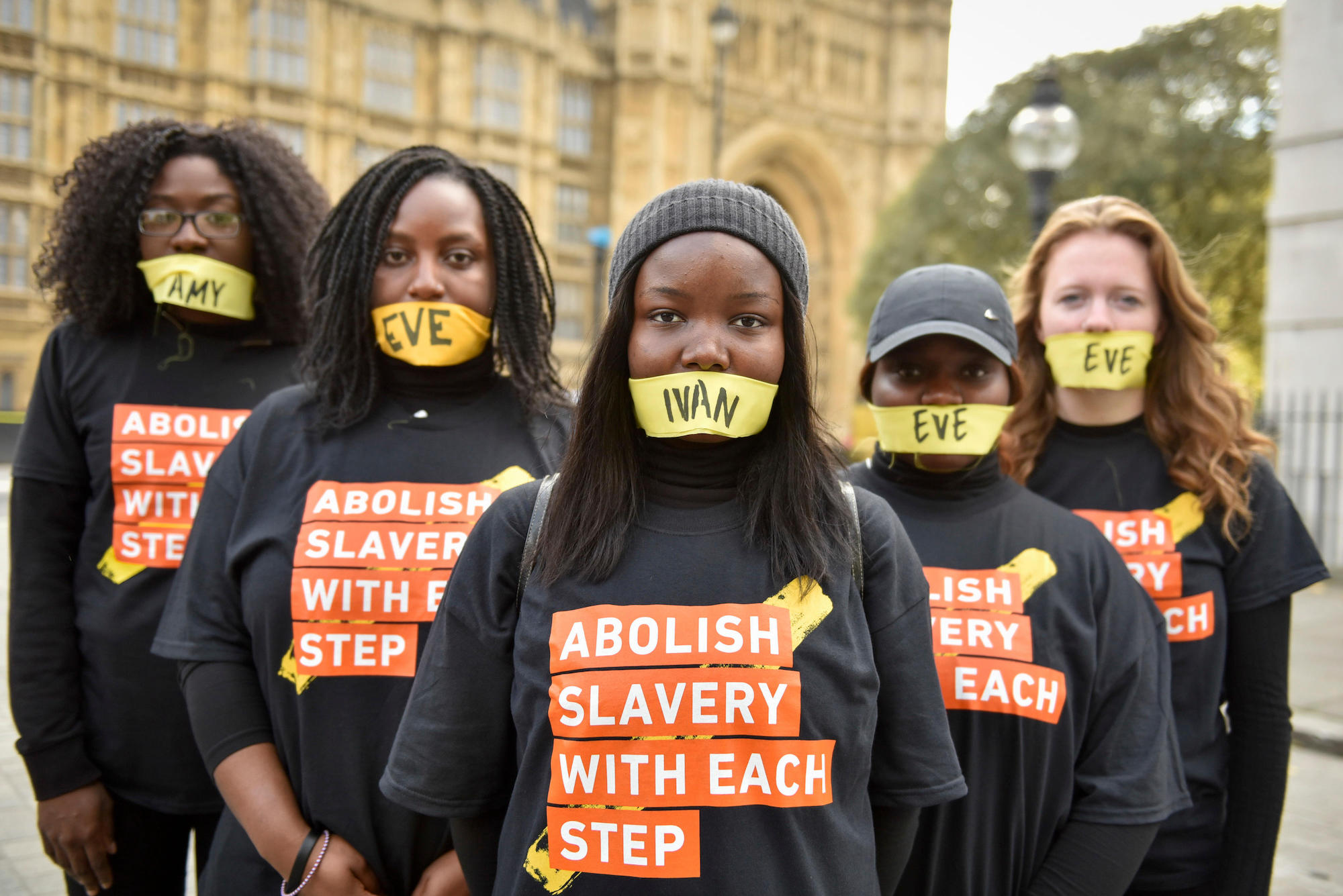
2025 marks 10 years since the UK’s Modern Slavery Act (MSA) was passed. As someone who was already working in the sector, I saw first hand how Theresa May’s government used the very real horrors of slavery to drum up support for the bill.
By the time of passage, there was significant cross party support and policymakers were asserting that the MSA would lead the world by tackling exploitation through legislation. The strength of commitment to the issue furthermore suggested the act was only the beginning. The MSA was to be the starting point, not the high point, of work to address trafficking in the UK.
The reality turned out to be far different. Neither the MSA nor subsequent legislative or policy changes took serious steps to address the structural causes of slavery, as can be seen in ever increasing National Referral Mechanism identification figures. Nor did the measures in the bill include pathways into decent work. These would have helped avoid re-exploitation and lower rates of ‘lesser’ workplace exploitation, which are key precursors to what the government calls modern slavery.
This is not due to a lack of awareness. The sector has spent a great deal of time, energy and research making decision makers aware of the root causes of exploitation and the need for systemic change. Both have been consistently highlighted, including by those with personal experience of the systems driving exploitation in the UK.
My experience in this sector has made one thing very clear to me: awareness is not enough.
We saw this demonstrated even in the debates over the MSA itself. In the runup to its passage, overseas domestic workers pushed strongly for an amendment that would reinstate the rights that David Cameron’s coalition government had taken away from them in 2012.
A decade on, the UK government remains focused on identification, rather than attempting to prevent exploitation or re-exploitation in the first place
The response from the government – which rejected the workers’ demands – was that the old rights hadn’t been enough to prevent abuse, that trafficking victims would benefit from protections under the MSA, and that the priority was to pass the act so that the UK could be “the first in Europe” with legislation of this kind. There were assurances made that, once a structure was put in place to identify and eliminate the symptoms of exploitation, issues would be ironed out, gaps would be filled, and structural causes would be addressed.
Yet later never came. A decade on, the UK government remains focused on identification, rather than attempting to prevent exploitation or re-exploitation in the first place.
It’s about having options
Exploitation exists on a continuum, and focusing on the worst of the worst is to only look at the tip of the iceberg. The structures which cause exploitation need to be addressed in their entireity. This is not only because ‘low level’ exploitation is already morally wrong. Exploitation has a habit of snowballing, and so tolerating low-level abuse makes it more likely for extreme forms like trafficking and modern slavery to emerge.
Instead of deploying preventative medicine, however, it is UK policy that migrant workers on restrictive work visas cannot access any government pathway to leave exploitation unless their treatment meets the threshold of trafficking or slavery.
Without such a pathway, exit is, for the vast majority of migrants, untenable. Many hold migration-related debts that only UK earnings will enable them to repay, and any independent challenge is unlikely to be successful. Rather than redress, it is more likely a worker will lose their job, visa sponsorship, and accommodation while also opening themselves up to immigration removal.
As detailed in the Labour Exploitation Advisory Group (LEAG)’s report on the continuum of exploitation in practice, immigration rules are intentionally weaponised by exploitative employers to bring workers to heel.
I didn’t want to leave at first because my employer threatened me with imprisonment for a long time if I did escape and she would have me deported.Colette, female Southeast Asian live-in care worker, (LEAG Report)
This creates an environment where workers cannot realistically speak out. Exploitation thus goes unreported, which in turn creates the conditions for more and more severe exploitation.
Treatment is not prevention
There have been multiple reviews and much criticism of the National Referral Mechanism (NRM) and its associated support systems over the last decade. Where positive change has happened, this has usually been the result of hard fought challenges by survivors themselves. But wins have been rare in a context where the UK government has consistently prioritised immigration enforcement over workers’ rights. This has prevented the use of sensible systems that would keep people visible, legal and able to access justice in practice.
In 2021 the government introduced their New Plan for Immigration. This laid the groundwork for the Nationality and Borders Act 2022, which re-framed slavery as an immigration matter and narrowed access to the NRM, while doing nothing to address the role of immigration restrictions in driving slavery. This approach, combined with unevidenced claims that the UK’s slavery support systems were being “abused”, led to condemnation by UN experts in December 2022. In their analysis, the plan would deter victims from coming forward and embolden exploiters.
The Labour government has largely ignored the criticism as well, opting instead to continue the broad approach laid out by their Tory predecessors. The new Borders Security Bill builds on the Nationality and Borders Act to maintain a hostile environment for anyone with an irregular or restrictive visa status. The government's flagship Employment Rights Bill also fails to create options for exploited workers, such as bridging visas or non visa cancellation clauses for workers trapped in abusive sponsorships. The UK government’s Immigration White Paper further increases restrictions on migrant workers with proposals which include increasing the qualifying period for settlement, keeping people temporary for longer. Meanwhile, referrals into the NRM are higher than they have ever been in the past 10 years.
There is a strong sense that, rather than learning from past policy mistakes, British policymakers are continuing to try and square a circle. We want migrant workers, but we don’t want to allow them a sense of security in the UK. It should be no surprise to anyone that this creates risks of exploitation.
This can be fixed
The UK can fix a lot of this. To do so would mean looking beyond the identification of extreme exploitation and taking seriously the wider structures driving exploitation in the UK economy today. It would also mean rejecting policies and language that commodify workers, which facilitate exploitation and drive down employment standards.
Workers must have practical options to leave exploitative work, raise complaints, and support themselves through alternative legal work
The UK’s immigration system needs to support the government's commitments not only on slavery, but also on workers’ rights. An Employment Rights Bill which only improves life for certain workers entrenches a two-tiered workforce. To prevent slavery, rights must apply to all workers.
Finally, the use of tied and other highly restrictive visas must end. These give significant power to employers while leaving workers with few options and impossible choices. Workers must have practical options to leave exploitative work, raise complaints, and support themselves through alternative legal work while doing so.
This is all practical and possible. The Australian government introduced a new ‘workplace justice visa’ in 2024, which enables migrant workers to stay in Australia while they seek redress. The UK also has a recent example of increasing the options for workers on restrictive visas. Its Ukraine Extension Scheme allows eligible Ukrainian nationals in the UK to receive three years of leave, permission to work in any sector, and recourse to public funds. This appears to have done much to prevent exploitation.
Initiatives such as the Bright Future Project have shown how, with permission to work, exiting services can support people who have been trafficked into decent employment. This is an infinitely better way to avoid re-exploitation than keeping people in limbo and waiting on identification decisions, without any clear way to move on from their exploitation.
Ten years ago the UK government made campaigners a promise: support and protection for victims were key to the Modern Slavery Act. It’s high time policymakers honoured that promise. As domestic workers have been saying for well over a decade, visas address power discrepancies and prevent exploitation when they recognise holders as workers and enable the exercise of rights in practice. Without this, we put people on a path towards exploitation. So let’s start with listening to workers and making sure all work visas give workers options.
Explore the series so far
- Ten years on, have we moved Beyond Trafficking and Slavery?
Joel Quirk, Cameron Thibos and Ella Cockbain - What helps practitioners listen to their critics?Nick Grono with Joel Quirk
- We know how to identify exploitation. Now we need to stop itKate Roberts
- Labour rights won’t make criminal gangs go away
Marika McAdam - Twenty years of slow progress: Is anti-trafficking changing?Borislav Gerasimov
- Can progressives re-capture anti-trafficking from the right?Dina Haynes
- Why do anti-trafficking donors fund their critics?Ryan Heman
- The UN’s missed chance to lead on anti-traffickingMike Dottridge
- Law enforcement alone will never stop modern slavery
Klára Skřivánková - Mistakes happen in anti-trafficking. We must learn from themErin Williamson
- How US funding built a brittle economy in anti-trafficking
Chris Ash, Sophie Otiende, Allen Kiconco - County lines: an ‘appalling failure of child protection’
SPACE (Stop & Prevent Adolescent Criminal Exploitation) - Global inequality is the World Bank’s elephant in the roomAlf Gunvald Nilsen
- Do forced labour bans protect workers in supply chains?Judy Fudge
- Are grooming gangs the far right’s golden goose?Louise Raw
- We can't keep ignoring human trafficking in warJulia Muraszkiewicz
- Could anti-trafficking survive without victims to rescue?Hannah Lewis