Anthony Barnett (London, OK): Before joining millions around the world at an Avaaz organised LiveEarth barbeque (you can still join us, see here), in my case cooked and hosted by Paul Hilder in South London, I went to see Mark Morris’s Mozart Dances. Constitutional? I’d say so. After the performance he gave a talk along with director Peter Sellers. Morris told us his three Mozart dance compositions are “Less about the Declaration of Independence than musical symmetry, but it is both”.
Ever since seeing a performance of V I’ve thought that Morris produces the most beautiful events on earth, and I mean earthly. Movement, colour, music, time, come together with the emotions of the body and the relationships between us. His work is sublime. It embraces physical wildness and does not seek to be ethereal.
When he spoke about his method, he talked of the way he gives depth and equality without neutrality to his dancers, so that the audience enters the space of the dance and shares the enjoyment of those doing the work. It is not about front, daring and spectacle as most performance is, whether on stage or screen - which manipulates our emotions to come between us and ourselves.
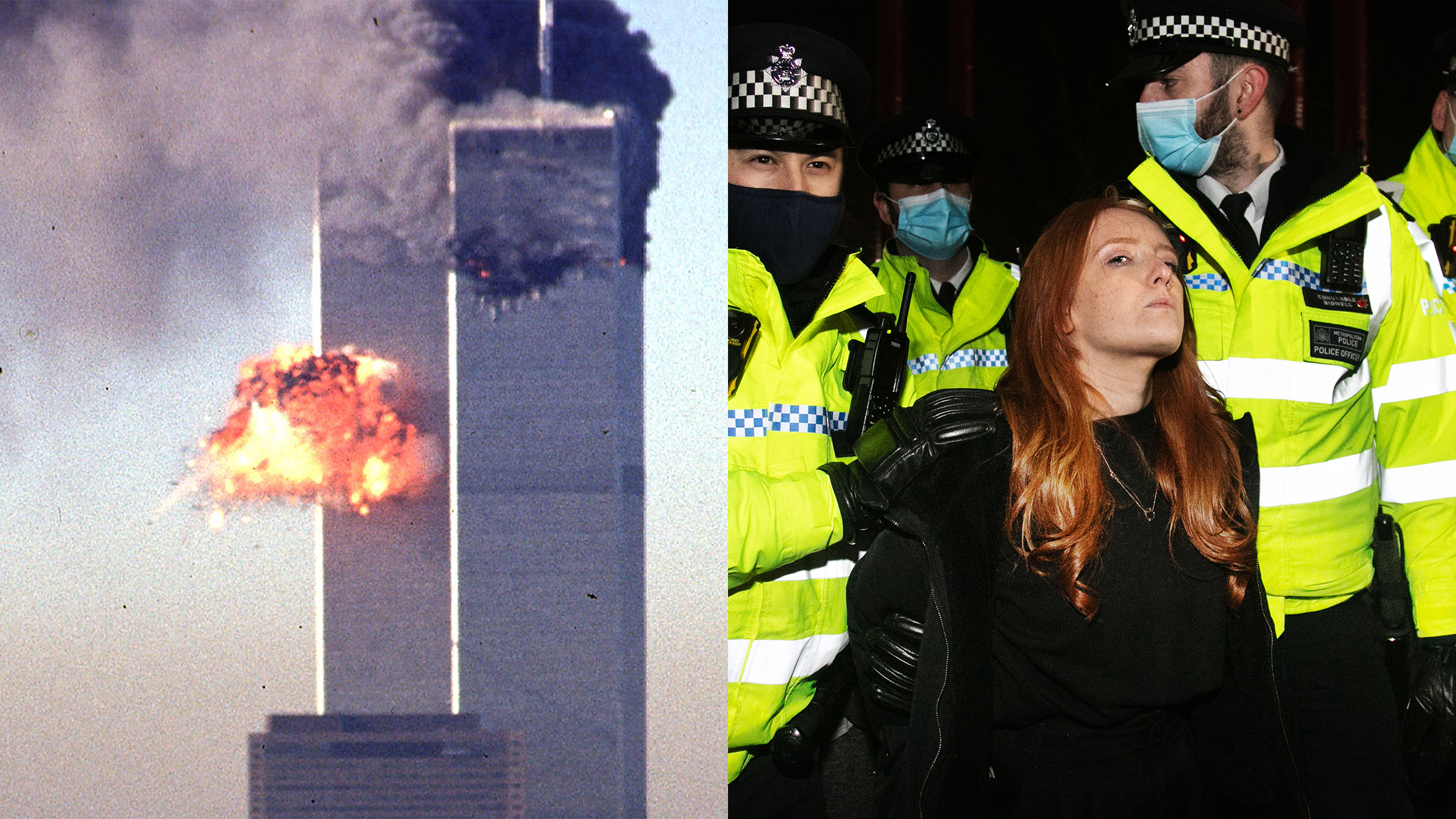
After the United States response to 9/11, Tom Nairn argued that it is now necessary to be anti-American. That is to say, one can’t just blame Bush and Cheney, there is a system failure going on expressed in the US desire to dominate globalisation.
The best criticism of, and alternative to, the ugly nature of American civilisation is still... American. In Morris, the United States creates the most beautiful expression of the human spirit in a way that is undeniably American as well as universal. When Morris and Sellers talk, they hide behind gestures of play and self-depreciation. But there is no European-style irony, distance or wretchedness in their work. Morris understands what he does as American in the Mozart, Enlightenment, Franklin tradition. Europeans, as global citizens, can take some pride in this.
The issue touches an especially raw nerve in Britain where our constitution, such as it is, has been preserved thanks to the American alliance. Its future will be argued out not just in terms of this or that reform but also in terms of our defining relationships with the rest of the world, as constitutions always are. This is what it is all about: