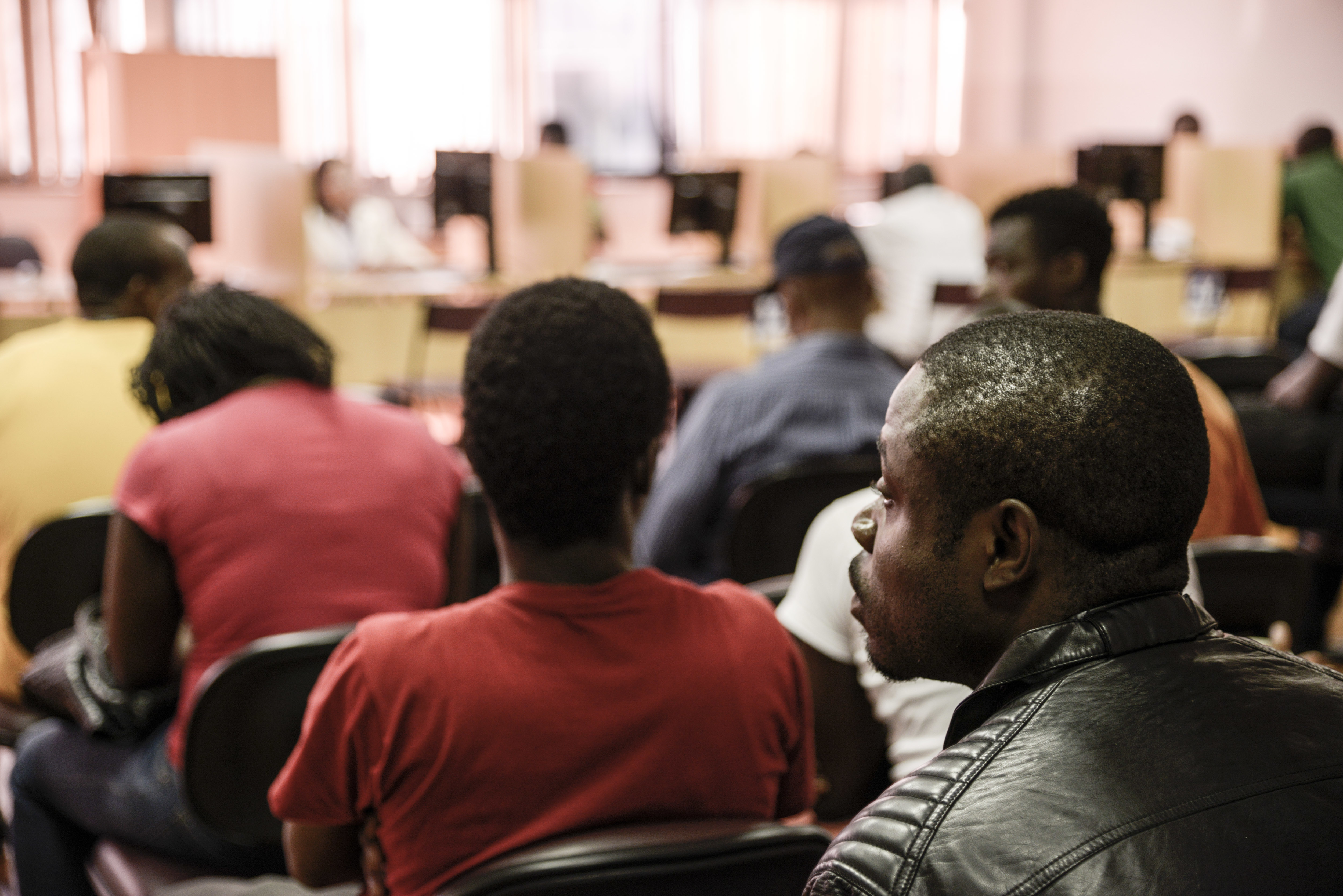
For many African migrants and refugees, travelling to Brazil is safer and easier than to Europe. In Europe, those seeking safety have to contend with imprisonment at the borders, illegal pushbacks, deportation and violence. In Brazil, anyone entering without a visa can apply for refugee status. Asylum applications can be accessed online, and legal assistance for the process is available.
While efforts have been made to improve the asylum process in Brazil, many refugees and migrants still struggle. Reliable information in French or English is hard to find, and many African migrants report experiencing discrimination and harassment. Many do not know that they have a right to asylum, and those without family or friends in the country can find themselves on the streets. Informal and formal migrant networks try to offer solidarity and support, as do some private citizens. With this help some migrants find ways to build the lives they want. Some don’t.
Everything was in Portuguese
"It was easy to get into Brazil. When my brother and I arrived at São Paulo airport in 2015, we just showed our passports and they authorised us to enter. But there was no information in any language other than Portuguese. We managed to find a bus, and when we got in we met other Africans who had come to the airport to pick up relatives. One guided us to the city centre. There we found the NGO Arsenal da Esperança, which offered us a bed, dinner, coffee, and a closet. Before eating, they made us say a prayer. Later, someone from Arsenal took me to the police and I filled in the forms to claim asylum. Then I registered for national insurance and for the national health system. My friends at Arsenal helped us to do it all.”
I didn't know I could apply for asylum
“I entered Brazil through the city of Rio de Janeiro. I came with a visa, so I didn’t apply for refuge on arrival. I didn’t know I could. I was pregnant with my daughter, and I didn't know anyone here. When I left the airport, I saw a man waiting for another passenger. He was wearing clothes with an African print, so I spoke to him in my language. He offered to help. He took me to his house and then to Caritas. They welcomed me and took care of me very well. They do not have a shelter for women, only for men, but they gave me money to cover food and accommodation.”
A stranger helped me when I was pregnant
“When I arrived here from Venezuela in 2014, I was pregnant. It was no problem to enter. I met a Brazilian woman from São Paulo who helped me. I didn't speak Portuguese, so we talked through Google Translate. She took me to her house in São Paulo and took very good care of me. After my son was born she took me to the federal police to find out how I could claim asylum. I had the right to do so from the beginning, but I didn’t know that.”
You don't get information automatically
“I arrived in 2009. Getting into Brazil was not difficult, but I didn't know much about the place. I didn't speak Portuguese either. It's hard to get information here. I was in a shelter, and by coincidence I bumped into a friend from my country who was living in São Paulo too. She helped me a lot. She said, ‘you will first look for a place to live and then you will apply for asylum’. So that’s what I did.”
To accompany this series, Missão Paz has also produced a legal support guide for migrants in Brazil. It offers helpful advice on a range of topics – from rights and immigration status to dealing with xenophobia, racism and hate crimes – as well as contact details for migrant support services in the country.