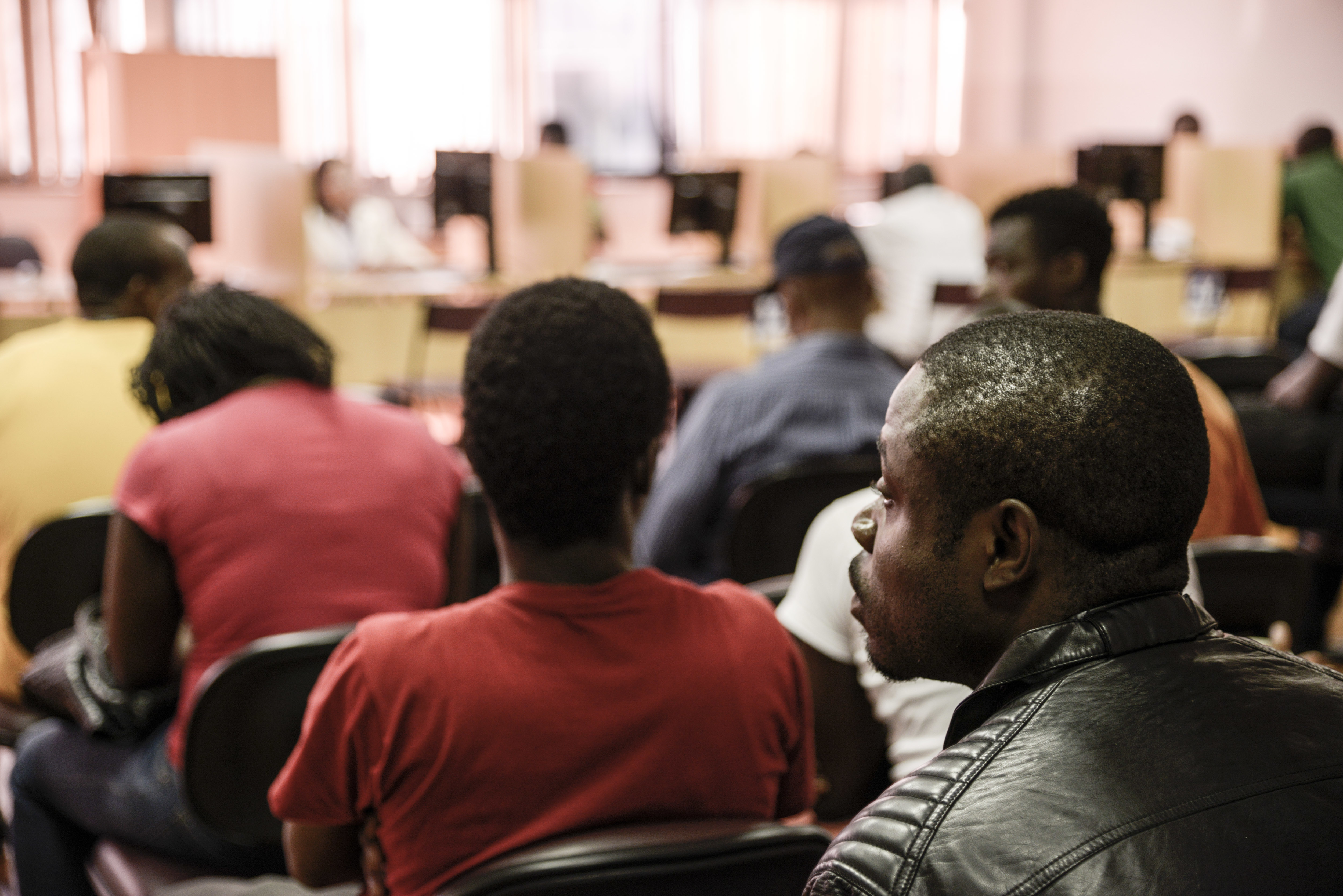
The Provisional Migration Registration Document, commonly known as the ‘Refuge Protocol’ or simply ‘the protocol’, is issued to people who are awaiting a decision on their asylum application by the National Committee for Refugees (CONARE). The protocol is an official identity document which permits asylum seekers to access work, healthcare, and a variety of official systems.
However, even with a valid protocol many migrants and asylum seekers in Brazil struggle to access formal work and education markets. A lack of public awareness means that many employers and institutions do not accept the protocol as sufficient documentation. And while the protocol is now a plastic identity card, many asylum seekers still carry older versions that were simply printed on an A4 sheet of paper. This generates further distrust in the validity of the document. These difficulties make asylum seekers frequently dependent on others to open a bank account, rent a house or find a job. They can even force them into irregular and exploitative conditions.
I can't even open a bank account
“They refused to open an account for me in every single bank. I would give them my protocol and they would look and say: ‘you can't open an account here with this paper’. This is wrong, because we have the right to open a bank account. I eventually managed to open a digital account, but then they sent me a message asking for a photo of my document. I sent a photo of the protocol, and they said they were not able to identify that type of document. A few days later they sent me my money back and closed my account. I ended up having to send my money to my aunt's account.”
I was told this is not documentation
“It was a struggle for me to open an account too! I went to a bank in the city centre with my protocol and said I wanted to open an account. The attendant looked at my protocol, and simply turned away. I just stood there, looking at him. I stayed there for almost five minutes, just waiting for an answer. He finally said, ‘we don't open an account with that. This is not a document.’ It was humiliating. I left and went to another branch. This time they asked for proof of my address – a bill under my name, which I didn't have. Finally I took my housing contract to the registry office and had them officially authenticate the document. I took this authenticated contract, my passport, my protocol and the owner of the house with me to the bank. They finally accepted to open an account for me, but it was a struggle.”
No one would hire me
“If I said that if I found a job because of the protocol or because of my documents, it would be a lie. Nobody would hire me with the protocol. I got my job because a person from my country has a business here, and his wife is a friend of mine. She recommended me to him. There's no way we can get work with the protocol. I couldn’t even get a cleaning job here.”
I can't work anywhere else
“I looked a lot for work, but I couldn't get it. They simply don't accept the protocol. My only alternative was to work with my aunt at her hair salon. She invited me to train and work there. I’m still working as a hairdresser because I couldn’t find opportunities to work in other places. The doors didn't open for me, so I stayed working in the salon.”
I never had formal work
“With the protocol I never had formal work, but I worked informally as a cleaner for five years. We worked a 12-hour shift, for around R$40.00 (£6) per shift. I couldn’t pay my rent. The owner of the cleaning place also had a car selling business, so I asked her if she had a job for me there. She gave me one there too, but they closed their business in 2017. I still couldn’t find any formal work, so I started cutting hair at home and selling food cooked in my kitchen. I'm still doing these informal jobs today.”
Landlords take advantage of our situation
“If we depended only on the protocol, I don't think anyone would get a house here. I was able to rent mine through a recommendation. I always look for a house where other Africans or refugees lived before, because then you can meet the landlord through them. I'm afraid to move a lot, because you don't know if you're going to find somewhere else. And landlords take advantage of our situation, because they know we are foreigners. For example, if I have visitors in my house, they increase the rent for that month. This is crazy. I can't bring someone to my house, when I rented the house!”
To accompany this series, Missão Paz has also produced a legal support guide for migrants in Brazil. It offers helpful advice on a range of topics – from rights and immigration status to dealing with xenophobia, racism and hate crimes – as well as contact details for migrant support services in the country.