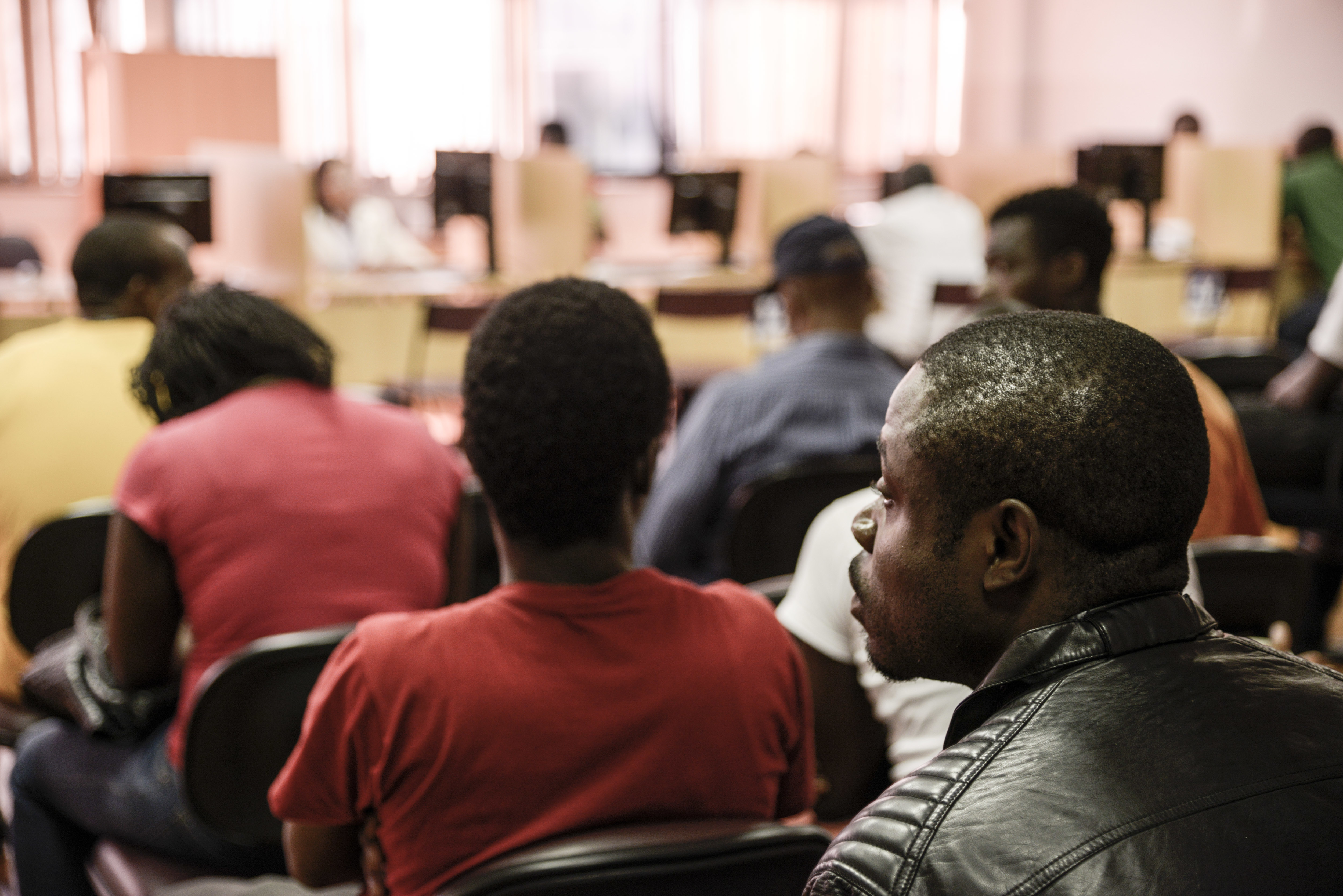
The difficulty of acquiring documentation frequently pushes migrants and asylum seekers into irregular living situations. While they are not necessarily deported if they are caught, those living without documents are cut off from a whole host of basic rights. They are unable to access the formal job market, rent a house, enrol in schools and universities, travel safely, or access government benefits. The COVID-19 pandemic worsened the situation, and many aspects of the system have yet to recover.
I need documents to work, study and rent
“I have lived irregularly for seven years, and have been here for eight. I had a one-year visa, and when my visa expired I simply stayed. I think the good thing about Brazil is that police don’t stop you on the street here to check if you have a document. The problem with being undocumented is that it makes it difficult to get work, study or rent.”
It took me six years to realise I could apply
“I arrived in 2009, but didn’t apply for asylum until 2015 due to a lack of knowledge. I was too afraid to go to the federal police, I had no information, and the people I knew didn’t help me either. So during those first six years I lived irregularly.”
It's an open-air prison
“If I had been able to continue my college degree, I would have already graduated. I would already have achieved my goal of becoming a nurse. If I could travel, I would visit my mum. I miss her. But I can't. I'm here in some kind of open-air prison. I can't leave, but I can't do anything because I don't have documents. I'm doomed to work in the salon.”
I wanted to be independent
“I came to Brazil in 2004 on a three-month business visa, in order to attend a fair. I was living in Venezuela at the time. I travelled around a bit after the fair, and decided to stay longer. I went to the federal police about 10 days before my visa expired, but they refused to extend it. So I went back to Venezuela, and then re-entered Brazil illegally. I travelled back and forth between the two countries for about five years. I finally approached the federal police to apply for asylum. They told me: ‘You are in the country illegally. We cannot help you, but you can go to Caritas.’ I didn’t though. I felt rejected, and decided to remain illegal and not ask for anything else.
At that time I was already dating my son's mother, so she put everything in her name and gave it to me: debit card, credit card, and so on. I became dependent on my girlfriend. I did everything through her, through her documents. We didn't get married, I didn't want to get married. It was only when she got pregnant that I applied for a visa.”
To accompany this series, Missão Paz has also produced a legal support guide for migrants in Brazil. It offers helpful advice on a range of topics – from rights and immigration status to dealing with xenophobia, racism and hate crimes – as well as contact details for migrant support services in the country.