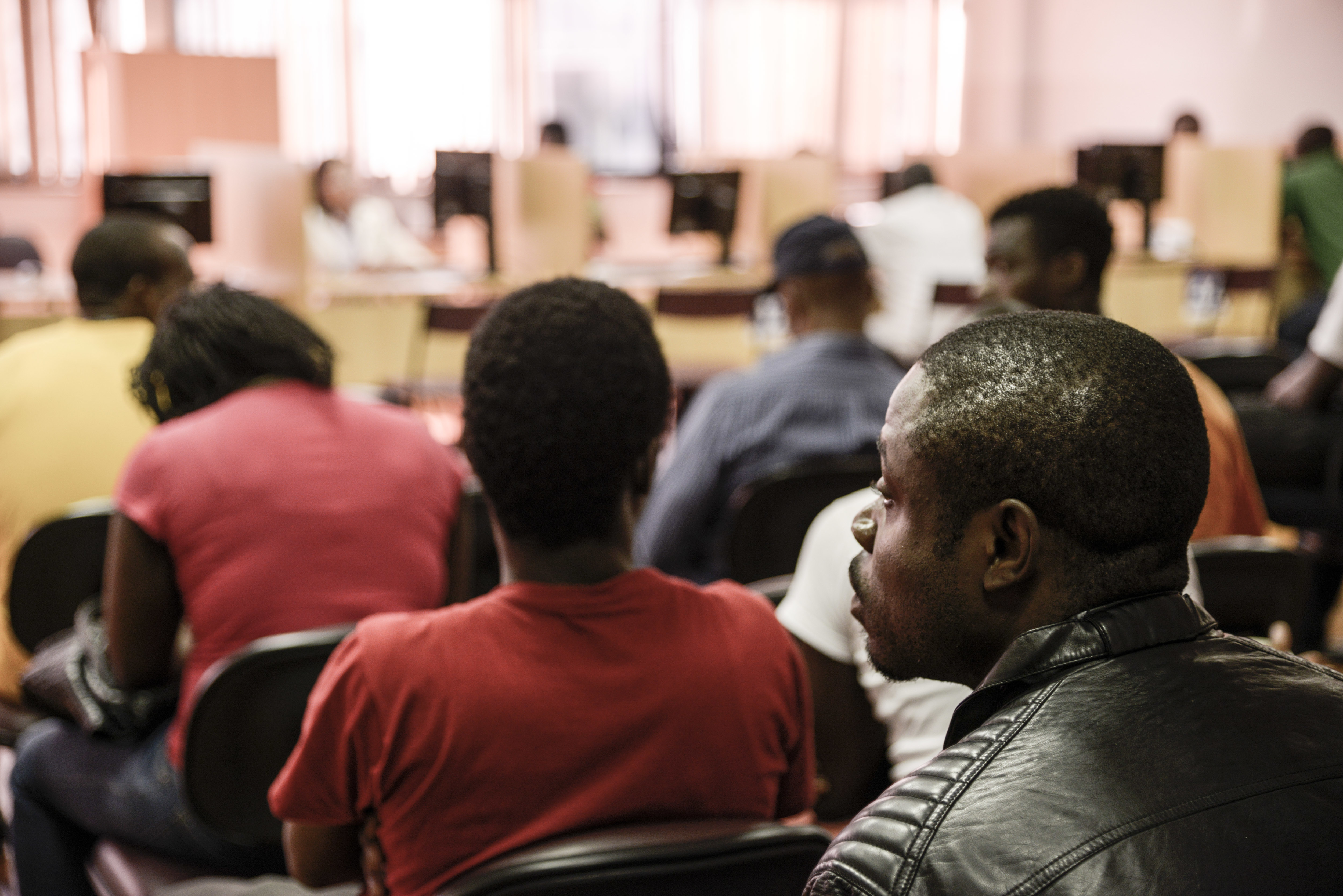
Many migrants live far from their families for years. Brazilian law allows documented migrants and refugees to bring family members to the country after settling there themselves, however bureaucratic processes and arbitrary decision-making makes reunification more difficult in practice. Many report a lack of transparency around both the family reunification process and appeals for rejected applications. For those who get through the system, the high costs of travel pose another significant barrier. Many work day and night, often while living in a situation of precarious freedom, in order to bring their loved ones to Brazil.
There's no way I could bring my daughters here
“How can I bring my daughters here? I have documentation problems, so there is no way they would grant us the visa. If you can't regularise yourself, you also can't get good work. So how can you pay to bring them over and support them here?”
My children couldn't escape with me
“I don't understand the laws here. It’s a simple fact that your family often can’t run away with you. So why is it that when the federal police accepts that you had a good reason for running away, you aren’t automatically able to bring your family over? In my case, I left my children behind. It would have been more difficult to bring them at first, because there was no housing for me here. Now I have to fight and prove that I can support my family to bring them over. There’s an assumption that, because I’m a refugee, I can’t even support myself – let alone my children.”
I'm saving up to bring my brother
“I'm trying to bring my brother to Brazil. For me, even if it’s a R$1 (£0.15) job I do it, so I can save up to bring him over. Once he’s here, we will be two people working and saving money to bring over the others.”
It will be difficult to bring my daughters
“I haven’t seen my daughters since I fled the war. I went to CRAI [Reference Centre and Assistance for Immigrants], and they gave me two papers for family reunion. But it is very difficult to bring them over.”
I applied but it wasn't easy
“I already invited my family to come here, and I am now waiting for the visa to be accepted. It wasn't easy, and I wouldn’t have been able to complete the forms if people hadn’t helped me. There is too much bureaucracy. If you don't know how it works, you won’t be able to submit the application.”
To accompany this series, Missão Paz has also produced a legal support guide for migrants in Brazil. It offers helpful advice on a range of topics – from rights and immigration status to dealing with xenophobia, racism and hate crimes – as well as contact details for migrant support services in the country.