openDemocracy has joined forces with Fleet Street bosses to urge the UK government to stop the rich and powerful using the courts to intimidate journalists.
More than 70 leading editors, lawyers, publishers, and journalists have warned that the UK’s legal system is being abused by oligarchs and vested interests to silence the media from exposing corruption and wrongdoing.
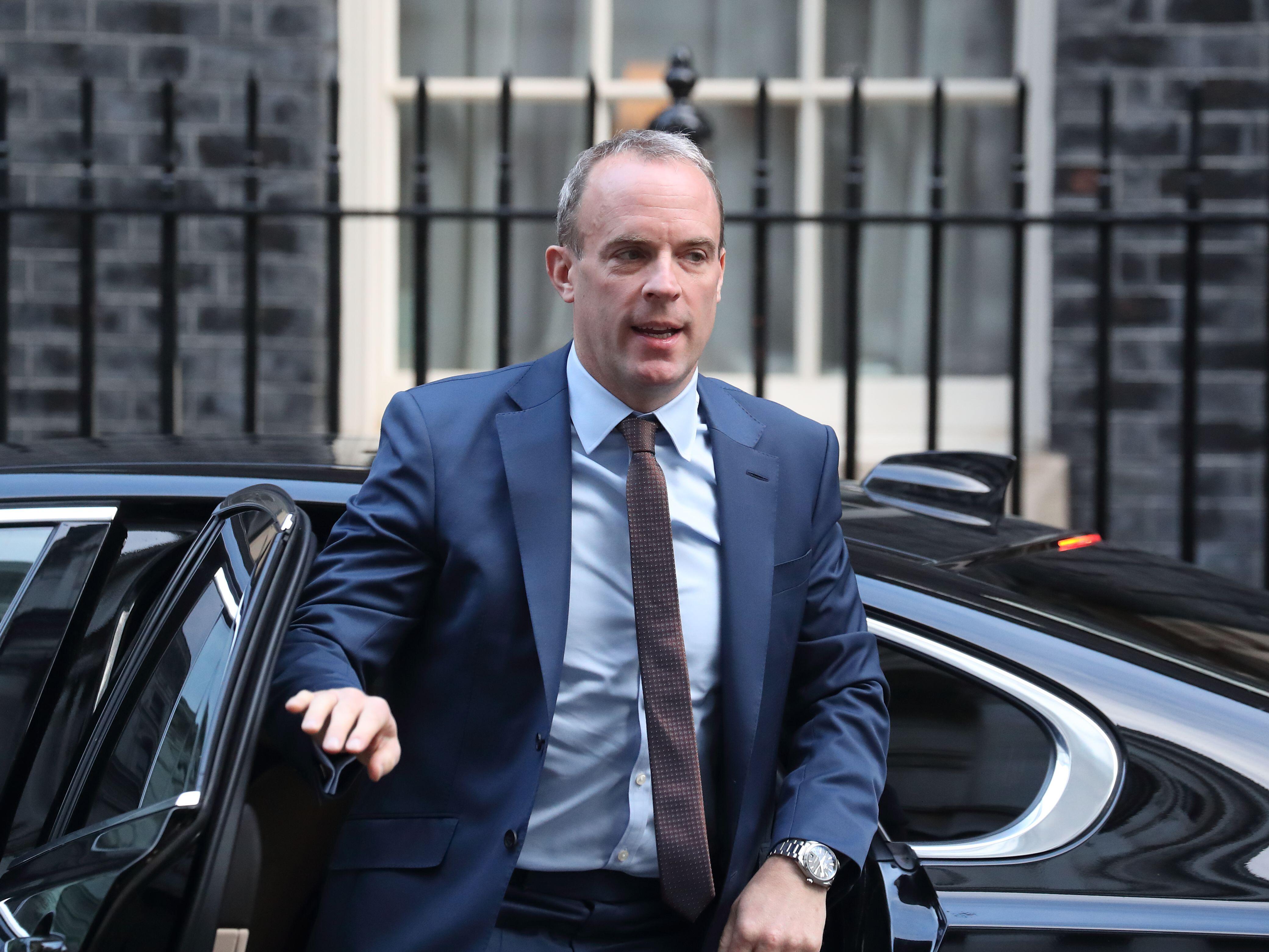
The coalition, which includes the editors of The Guardian, The Times, The Telegraph, The Mirror and this website, have signed a joint letter to the secretary of state for justice, Dominic Raab, urging him to make good on a promise to reform the law to protect journalists.
It comes after a string of high-profile cases in which journalists have been targeted by so-called ‘strategic lawsuits against public participation’ (SLAPPs) after reporting on powerful figures.
“The super-rich have long viewed the UK courts as an instrument to shut down any scrutiny of their activities,” said Catherine Belton, who faced a number of lawsuits over her book ‘Putin’s People: How the KGB Took Back Russia and Then Took on the West’.
“The current system skews proceedings in favour of those with the deepest pockets, making it easy for the super-rich to intimidate media organisations, journalists and public watchdogs into silence and censorship.”
The UK has become the leading international source of legal threats against journalists investigating financial crime and corruption, according to research by the think tank Foreign Policy Centre in 2020.
Media law experts and press freedom campaigners want legal reforms that would allow SLAPP cases to be thrown out of the courts and see offenders fined to deter their repeated use.
Caroline Kean, one of the lawyers involved in drafting the recommendations, said: “Having defended journalists, broadcasters and publishers from SLAPPs brought by those seeking to escape accountability and scrutiny, we need to make sure the law works for everyone – not just those with the money and power to intimidate those who seek to expose suspected wrongdoing… and to force others to refrain from publishing at all.”
Full text of open letter
To the Rt. Hon. Dominic Raab MP
Deputy Prime Minister and Lord Chancellor and Secretary of State for Justice
Re: Adoption of a UK Anti-SLAPP Law
As a group of leading editors, journalists, publishers, lawyers and other experts, we are writing to express our support for the Model UK Anti-SLAPP Law launched this November by the UK Anti-SLAPP Coalition - and to urge you to move swiftly to enshrine these proposals in law.
Events over the past year have shone a light on the use of abusive lawsuits and legal threats to shut down public interest speech. This is a problem that has long been endemic in newsrooms, publishing houses, and civil society organisations. In an age of increasing financial vulnerability in the news industry, it is all too easy for such abusive legal tactics to shut down investigations and block accountability.
We welcome your commitment to bring in reforms to address Strategic Lawsuits Against Public Participation (SLAPPs), as you said on 20 July 2022, in order to “uphold freedom of speech, end the abuse of our justice system, and defend those who bravely shine a light on corruption.” High-profile cases – such as those targeting Catherine Belton, Tom Burgis, Elliot Higgins, and more recently openDemocracy and The Bureau of Investigative Journalism – are just the most visible manifestation of a much broader problem which has affected newspapers across Fleet Street and the wider UK media industry for many years.
The public interest reporting targeted by SLAPPs is vital for the health of democratic societies, including law enforcement’s ability to investigate wrongdoing promptly and effectively. This is of acute importance in the UK, which journalistic investigations have repeatedly shown to be a hub for illicit finance from kleptocratic elites. As of April 2022, the National Crime Agency (NCA) has estimated the scale of money laundering impacting the UK is in excess of £100bn a year.
Journalism has a huge role to play in tackling this problem. For example, investigations by the Organized Crime and Corruption Reporting Project (OCCRP) into the ‘Azerbaijani Laundromat’ scandal supported the NCA in seizing millions in corrupt funds from a number of individuals, including £5.6 million from members of one Azerbaijani MP’s family. Prior to the NCA’s seizure, the same MP had spent two years pursuing Paul Radu, co-founder of OCCRP through London’s libel courts. The inequality of arms in such cases is clear. As Radu notes: “The people suing journalists in the UK rely on these huge legal bills being so intimidating that the journalists won’t even try to defend themselves.”
In March 2022, at the launch of the Government consultation on SLAPPs, you stressed that “The Government will not tolerate Russian oligarchs and other corrupt elites abusing British courts to muzzle those who shine a light on their wrongdoing.” The findings of the consultation, published in July, clearly stated that “the type of activity identified as SLAPPs and the aim of preventing exposure of matters that are in the public interest go beyond the parameters of ordinary litigation and pose a threat to freedom of speech and the freedom of the press.”
Fortunately, there is an oven-ready solution to this problem. The Model Anti-SLAPP Law, drafted by the UK Anti-SLAPP Coalition in consultation with leading media lawyers and industry experts, would provide robust protection against SLAPPs, building on the framework proposed by the Ministry of Justice in July. Key features include:
- A filter mechanism that empowers courts to swiftly dispose of SLAPPs without the need for a subjective enquiry into the state of mind of the SLAPP filer. This mechanism should subject claims that exhibit features of abuse to a higher merits threshold.
- Penalties that are sufficient to deter the use of SLAPPs and provide full compensation to those targeted. Such penalties should take into account the harm caused to the defendant and the conduct of and the resources available to the claimant.
- Protective measures for SLAPP victims including cost protections, safeguards, and measures to reduce the ability of SLAPP claimants to weaponise the litigation process against public watchdogs.
The need could not be more urgent. Research by the Foreign Policy Centre and other members of the UK Anti-SLAPP Coalition has found that SLAPPs are on the rise and that the UK is the number one originator of abusive legal actions. In fact, the UK has been identified as the leading source of SLAPPs, almost as frequent a source as all European Union countries and the United States combined.
The EU has already taken steps, with a proposed Anti-SLAPP Directive announced in April. In the US, 34 US states already have anti-SLAPPs laws in place, and this year Congress has introduced the first federal SLAPP Protection Act. Moreover, the US has also launched the Defamation Defense Fund, recognising the impact SLAPP actions have on journalists, as they “are designed to deter them from doing their work.”
You have made clear your commitment to strengthening legal protections against these legal tactics. It is crucial momentum is not lost. We encourage you to put forward, in the earliest possible time frame, legislation in line with the model UK Anti-SLAPP Law, to ensure that the UK can keep pace and contribute to this global movement to protect against SLAPPs.
Yours,
Paul Dacre, Editor-in-Chief, DMG media
Emma Tucker, Editor, The Sunday Times
Tony Gallagher, Editor, The Times
Victoria Newton, Editor-in-Chief, The Sun
Ted Verity, Editor, The Daily Mail
Katharine Viner, Editor-in-Chief, The Guardian
Paul Webster, Editor, The Observer
Alison Phillips, Editor, The Mirror
Roula Khalaf, Editor, The Financial Times
Chris Evans, Editor, The Telegraph
Alan Rusbridger, Editor, Prospect Magazine
Ian Hislop, Editor, Private Eye
Zanny Minton Beddoes, Editor-in-Chief, The Economist
Alessandra Galloni, Editor-in-Chief, Reuters News Agency
John Micklethwait, Editor-in-Chief of Bloomberg News
Drew Sullivan, Co-founder and Publisher, Organised Crime and Corruption Reporting Project (OCCRP)
Paul Radu, Co-founder and Chief of Innovation, OCCRP
Rozina Breen, CEO, The Bureau of Investigative Journalism (TBIJ)
Peter Geoghegan, Editor-in-Chief and CEO, openDemocracy
Nick Mathiason, Co-founder and Co-director, Finance Uncovered
Gerard Ryle, Director of the International Consortium of Investigative Journalists (ICIJ)
David Kaplan, Executive Director, Global Investigative Journalism Network (GIJN)
Michelle Stanistreet, General Secretary, National Union of Journalists (NUJ)
Dawn Alford, Executive Director, Society of Editors
Sayra Tekin, Director of Legal, News Media Association (NMA)
Sarah Baxter, Director, Marie Colvin Center for International Reporting
Paul Murphy, Head of Investigations, Financial Times
Rachel Oldroyd, Deputy Investigations Editor, The Guardian
Carole Cadwalladr, journalist, The Observer
Catherine Belton, journalist and author of the book, Putin’s People: How the KGB took back Russia and then took on the west
Tom Burgis, reporter and author of the book, Kleptopia: How dirty money is conquering the world
Oliver Bullough, Journalist and author
Clare Rewcastle Brown, investigative journalist and founder of The Sarawak Report
Richard Brooks, journalist, Private Eye
Matthew Caruana Galizia, Director of The Daphne Caruana Galizia Foundation
Mark Stephens CBE, Partner at Howard Kennedy LLP
Caroline Kean, Consultant Partner, Wiggin
Matthew Jury, Managing Partner, McCue Jury and Partners
David Price KC
Rupert Cowper-Coles, Partner at RPC
Conor McCarthy, Barrister, Monckton Chambers
Pia Sarma, Editorial Legal Director, Times Newspapers Ltd
Gill Phillips, Director of Editorial Legal Services, Guardian News & Media
Lisa Webb, Senior Lawyer, Which?
Juliette Garside, Deputy Business Editor, The Guardian and The Observer
Alexander Papachristou, Executive Director of the Cyrus R. Vance Center for International Justice
José Borghino, Secretary General, International Publishers Association
Dan Conway, CEO, Publishers Association
Arabella Pike, Publishing Director, HarperCollins Publishers
Joanna Prior, CEO of Macmillan Publishers International Limited
Meirion Jones, Editor, TBIJ
Emily Wilson, Bureau Local Editor, TBIJ
James Ball, Global Editor, TBIJ
Franz Wild, Enablers Editor, TBIJ
James Lee, Chair of the Board, TBIJ
Stewart Kirkpatrick, Head of Impact, openDemocracy
Moira Sleight, Editor, the Methodist Recorder
Paul Caruana Galizia, reporter, Tortoise
Tom Bergin, journalist and author
James Nixey, Director, Russia and Eurasia Programme, Chatham House
Edward Lucas, Author, European and transatlantic security consultant and fellow at the Center for European Policy Analysis (CEPA)
Sean O'Neill, Senior Writer, The Times
Dr Peter Coe, Associate Professor in Law, Birmingham Law School, University of Birmingham
Alex Wilson, Partner at RPC
George Greenwood, Investigations Reporter, The Times
John Heathershaw, Professor of International Relations, University of Exeter
Tena Prelec, Research Fellow, DPIR, University of Oxford
Thomas Mayne, Research Fellow, DPIR, University of Oxford
Jodie Ginsberg, President, Committee to Protect Journalists
Flutura Kusari, Senior Legal Advisor, the European Centre for Press and Media Freedom
Dr Julie Macfarlane, Co-Founder, Can’t Buy My Silence campaign to ban the misuse of NDAs
Zelda Perkins, Co-Founder, Can’t Buy My Silence campaign to ban the misuse of NDAs