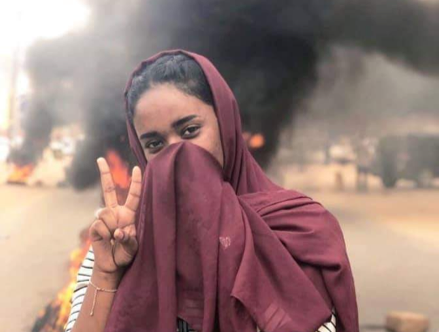
The reaction to the public stripping of a Coptic grandmother in Upper Egypt reminds us of the power of popular campaigns to shame those who use embodied concepts of honour politically.
The UN Human Rights Council has appointed Karima Bennoune as Special Rapporteur in the field of Cultural Rights. Bennoune is the author of the book, Your Fatwa Does Not Apply Here: Untold Stories from the Fight Against Muslim Fundamentalism.
Local gender activists in the Arab world face both censure from their own societies, and attacks by US-based anti-imperialist scholars who charge them with complicity with western imperialist designs.
On the first anniversary of Mohamed Brahmi’s assassination, his widow, Mbarka Brahmi, denounces fundamentalism and terrorism in Tunisia. This article is republished following the murderous attack on the Bardo Museum in Tunis.
In conversations with Karima Bennoune, Tunisian intellectual Amel Grami shares her analysis of the political crisis in Tunisia during the rule of the Ennahda party, and the strategies needed to defeat fundamentalism.
Four years after the downfall of Mubarak, women face a new patriarchal bargain: abandoning all forms of independent organizing in return for protection of their rights.
Faced with unequal power relations at the negotiating table and authoritarian consolidation, a member of the 50-committee explores how feminist voices achieved leverage when drafting the 2014 Egyptian Constitution to include article 11.
The last known message from the Egyptian activist Zainab Mahdy reads, " It's like we're digging in water...There is no justice…I am aware of that…there is no victory coming…we are just lying to ourselves so that we can live."
We must conceptualise the epidemic levels of sexual violence in post-revolutionary Egypt at least partly as “state violence”, and resist the state’s attempt to selectively appropriate women’s rights. Every post-revolutionary Egyptian regime has the blood of women on its hands.