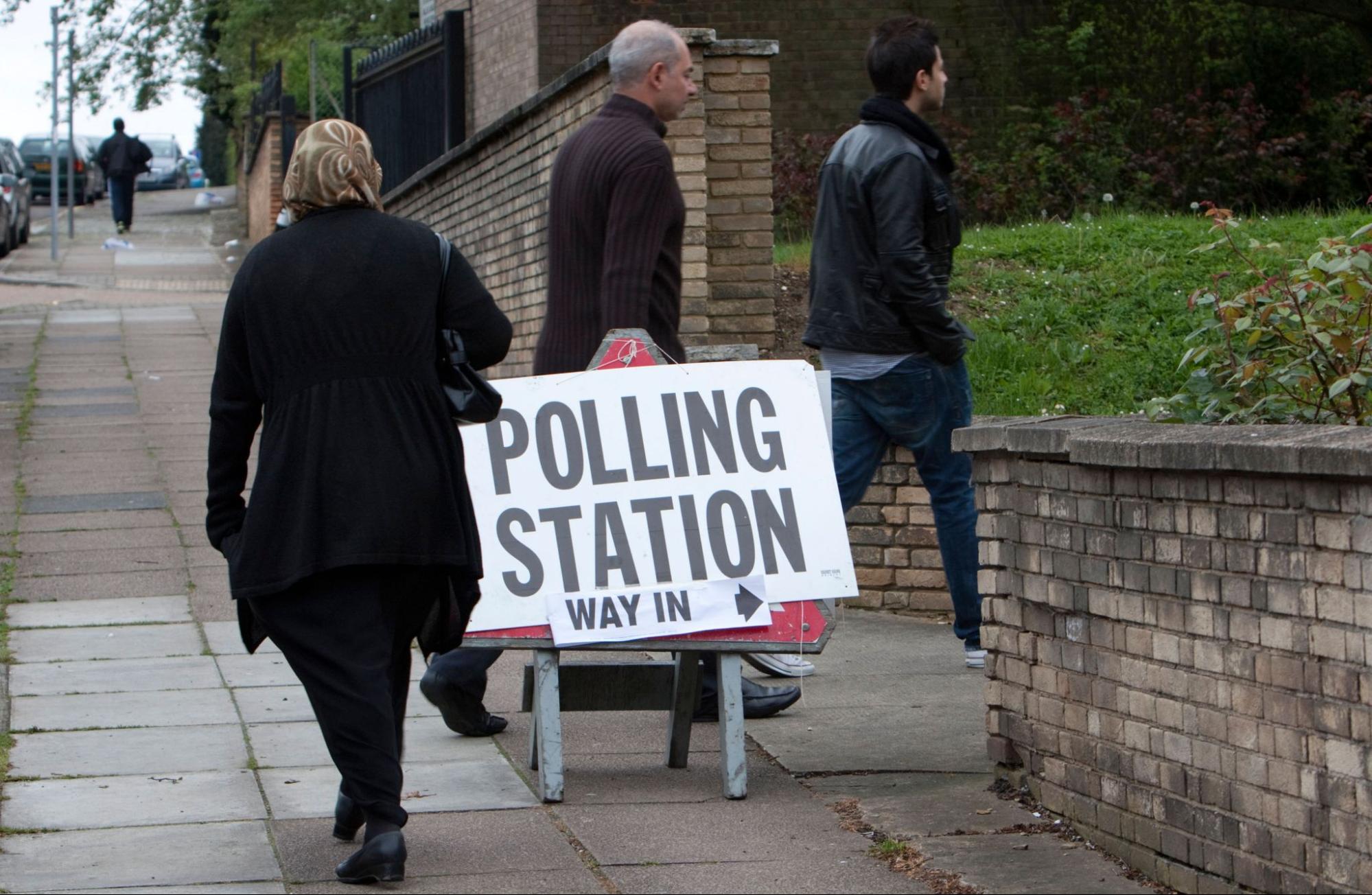
Voters could be turned away from polling stations for the first time at the local elections in May after the government made proof of ID a requirement last year.
The government says the changes are necessary to counter fraud, but it has faced accusations of voter suppression from critics and was forced to dismiss warnings that there is not enough time to implement the bill.
What is voter ID?
In previous elections, most voters in the UK were not required to provide any form of identification at polling stations in order to be able to vote in elections. If you wanted to vote on election day, all you had to do was arrive at your local polling station and provide your name and address before being given a ballot paper.
That is all set to change from the upcoming local elections in May as a result of the Elections Act 2022. Under this new law, people will have to have their identity confirmed by presenting photo ID to staff at polling stations before they are allowed to vote.
In Northern Ireland, voters have had to show some form of identification since 1985. The requirement was brought in after more than 149 arrests were made for impersonation during the June 1983 general election.
Why does the government say it’s needed?
The government claims the law will protect voters from having their vote stolen. It has argued that the ID requirements already exist for everyday activities, such as picking up a parcel, and that voting should be no different.
However, Full Fact has pointed out that the Post Office accepts a wider range of ID to pick up a parcel than the government allows voters to use to vote.
What do critics say about it?
MPs, including senior Tory backbenchers, have questioned the rationale behind the measures given that levels of electoral fraud are low.
“Voter ID is an illiberal policy in pursuit of a non-existent problem,” wrote Tory MP and former minister David Davis in openDemocracy last year.
“The number of allegations and convictions for voter impersonation are so low that requiring photographic ID is a wholly disproportionate response: just 88 allegations of in-person voter fraud were made between 2015 and 2019, during which time a total of 153 million votes were cast, including at three separate general elections.”
What’s more, the 88 allegations led to just three actual convictions for voter fraud.
Civil rights groups argue that the new requirements could lead to some voters being disenfranchised. Race equality think tank Runnymede Trust has warned that the changes will disproportionately affect voters from racialised backgrounds.
“Proposals outlined in the Elections Bill to introduce mandatory voter identification requirements pose a risk for Black and ethnic minority groups, who already face barriers to registering to vote,” the trust wrote in evidence submitted to the government.
“Possession of a form of photo ID is not even across the population. The government’s own figures show that 24% of white people in England do not possess a full driving licence, compared to 39% Asian and 47% of Black people. According to the 2011 census, only 66% of those of Gypsy or Irish Traveller background hold a passport.”
The list of IDs that can be used has prompted accusations that the government is favouring older voters over younger ones
Stonewall said that changes would also disproportionately affect LGBTQ+ people.
“LGBTQ+ people are three times more likely than the general population not to possess any photo ID that could be used to vote,” the charity said in a report produced in collaboration with the LGBT Foundation.
“This disparity is driven by the figures for trans and non-binary people. Nearly a quarter of trans respondents (24%) and nearly one in five non-binary respondents (19%) said they do not own usable photo ID, and could potentially be disenfranchised by the Elections Bill. This compares to 3% of non-trans respondents.”
The list of IDs that can be used to prove your identity at polling stations has prompted accusations that the government is favouring older voters over younger ones.
The Electoral Reform Society has pointed out it includes IDs such as over-60s transport cards that are predominantly held by older voters, while equivalent forms of ID used by younger voters – such as the 18+ Student Oyster card – are not accepted.
It added that a cross-party amendment that would have allowed student IDs, library cards, bank statements and other easily accessible forms of ID to be accepted at polling stations was repealed by the government during the final stages of the bill.
The government claimed that the types of ID proposed in the amendment were not sufficiently secure and might be prone to fraud. It added that voters will be able to obtain a free voter authority certificate if they do not possess any of the other forms of ID on its list.
The society claims that taken together all the restrictions mean the UK voter ID law is more restrictive than many US states that have been criticised for introducing laws labelled “voter suppression laws”.

Concerns have also been raised about the government not giving officials enough time to prepare for the changes.
In November, openDemocracy revealed that the government had dismissed private warnings by the election watchdog that the introduction of voter ID is neither “secure” nor “workable” by 2023.
The Electoral Commission told ministers it was “alarmed” about the delivery of the Elections Act, in correspondence we obtained through a Freedom of Information request.
In December, the Local Government Association also said that there was “insufficient time” to implement the changes and called for them to be delayed.
What forms of ID can I use?
- Passport issued by the UK, any of the Channel Islands, the Isle of Man, a British Overseas Territory, an EEA state or a Commonwealth country
- Driving licence issued by the UK, any of the Channel Islands, the Isle of Man, or an EEA state (this includes a provisional driving licence)
- A Blue Badge
- Older Person’s Bus Pass
- Disabled Person’s Bus Pass
- Oyster 60+ Card
- Freedom Pass
- Scottish National Entitlement Card
- 60 and Over Welsh Concessionary Travel Card
- Disabled Person’s Welsh Concessionary Travel Card
- Senior SmartPass issued in Northern Ireland
- Registered Blind SmartPass or Blind Person’s SmartPass issued in Northern Ireland
- War Disablement SmartPass issued in Northern Ireland
- 60+ SmartPass issued in Northern Ireland
- Half Fare SmartPass issued in Northern Ireland
- Identity card bearing the Proof of Age Standards Scheme hologram (a PASS card)
- Biometric immigration document
- Ministry of Defence Form 90 (Defence Identity Card)
- National identity card issued by an EEA state
- Electoral Identity Card issued in Northern Ireland
- Voter Authority Certificate
- Anonymous Elector's Document
What should you do if you don’t have any of the types of ID needed to vote?
A parliamentary research paper found that estimates of how many people in the UK may not have the required photo ID to vote range between 995,000 and 3.5 million people. If you are among them, and want to make sure you can vote in elections in the future, don’t leave it until the last minute.
The government has put in place a system that lets people apply for a document called a ‘Voter Authority Certificate’, which will let you vote if you don’t have any of the required forms of ID.
You can apply online for it, but you still need to know your National Insurance Number. You also need a recent, digital photo of yourself.
The government admitted that only around 10,000 people had applied for a Voter Authority Certificate at the end of January 2023.
What will happen if you forget your voter ID on polling day?
If you forget your voter ID on polling day and you are unable to get it before polls close, you will be unable to cast a vote.
There is no provision in the new law that will allow people with valid ID to vote and supply the necessary document at a later date.