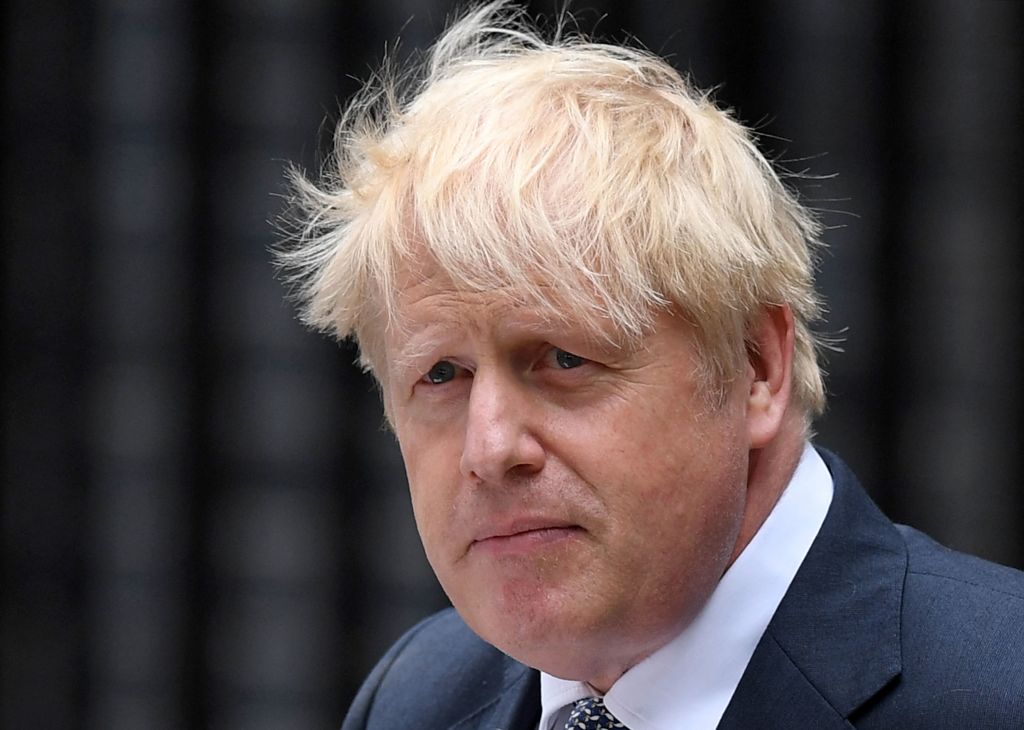
This week saw Boris Johnson bluster his way through a grilling on Partygate, structural racism and his missing WhatsApp messages at the Covid inquiry.
The former prime minister defended his government’s response to the virus, which has killed more than 232,000 people in the UK, as he gave evidence to the inquiry’s second module.
openDemocracy sat through every minute of the two-day hearing, so you don’t have to.
Here are some of the most outrageous moments from Johnson’s testimony.
‘Totally f***ing hopeless’
Asked why he had described his own government as “totally f***ing hopeless” in March 2020, a stuttering Johnson replied: “An important part of my job was not to uncritically accept that everything was good.”
‘What’s a factory reset?’
The inquiry heard how around 5,000 of Johnson’s WhatsApp messages, sent at the start of the pandemic, have gone missing.
The former prime minister appeared mystified as to how this could have happened.
Long Covid was ‘bollocks’
Asked if it was fair to say he had questioned “whether [long Covid] truly existed” and had “equated it to Gulf War syndrome”, Johnson replied: “Not really, no.”
The inquiry was then shown a report on long Covid delivered to Johnson in October 2020, on which he had written “bollocks” and “This is Gulf War syndrome stuff”.
‘They’ll die soon anyway’
The inquiry was shown handwritten notes from Johnson that said: “Why are we destroying everything for people who will die anyway soon?” and: “Bed blockers.”
The former prime minister also denied accusations by several of his staff that he was to blame for delays in government action.
Last month, Johnson’s ex-communications director told the inquiry that his inability to make decisions had “significantly impacted the pace and clarity of decision-making” in the early days of the pandemic.
Scientists not consulted on Eat Out to Help Out
Johnson told the inquiry he was “surprised” to hear chief medical officer Chris Whitty nickname the controversial scheme “Eat Out to Help the Virus”.
“I thought: ‘Well that's funny’,” the former PM said. “I didn’t remember this being something that had previously seemed to attract objection or controversy.”
Johnson defends ‘toxic’ cabinet
The inquiry also saw WhatsApp messages showing concerns over the “toxic reputation” of his office.
Johnson conceded meetings were too “male-dominated” and said he should have had more women in his top team, but insisted he “didn’t see any sign” of the toxic culture outlined by other witnesses.
He suggested it would have been worse to “have an operation where everybody was so deferential and so reluctant to make waves that they never expressed their opinion, they never challenged, and they never doubted”.
Parties in Number 10
Johnson dodged a question on whether he could have done more to stop the parties happening in Downing Street several times, before eventually conceding that he “possibly should have issued a general instruction to everybody to be mindful of the rules and how it would appear”.
‘Partygate has been misrepresented’
Johnson also claimed that the way Partygate has been portrayed “is a million miles from the reality of what actually happened”.
The former PM was fined for attending a party in Number 10 on his birthday in 2020, as were his wife, Carrie, and Rishi Sunak. In total, 126 fines were issued over social gatherings and parties held in Downing Street during lockdown.
Johnson’s own words used against him
Johnson was shown extracts from the diary of the government’s chief scientific adviser, Patrick Vallance.
In three of the diary entries, spanning almost a year, Vallance had written that Johnson wanted to “let the virus rip” and had said: “Yes, there will be more casualties, but so be it, ‘they’ve had a good innings’.
Vallance also claimed Johnson was “obsessed with older people accepting their fate” and in another entry, he wrote: “PM now obsessed with average age of [Covid] death being 82 (older than average life expectancy)”. He suggested that Johnson had said: “Get Covid, live longer.”
Despite all this, Johnson denied he wanted to let the virus rip.
Institutional racism in the NHS
Asked whether he agreed “that part of the disproportionate impact on the Black, Asian and ethnic minority communities includes healthcare workers”, Johnson said: “I’m not certain I've seen evidence to support that.”
The first 10 doctors to die of Covid-19 all belonged to ethnic minorities, and far less PPE was stockpiled for Black healthcare workers.